Minecraft OptiFine 1.18.2: Complete Guide to Download, Install, Boost FPS, Use Shaders and Optimize Performance
Minecraft OptiFine 1.18.2 transforms the Minecraft 1.18.2 experience with better performance, smoother gameplay, and improved graphics. Built for the Caves and Cliffs Part II update, it helps players enjoy larger worlds without sacrificing visual quality or frame rates. Whether you explore massive caves, build detailed structures, or play on multiplayer servers, this optimization mod makes Minecraft feel faster and more responsive. Many players install Minecraft OptiFine 1.18.2 to solve common performance issues. Low FPS, stuttering, long chunk loading times, and lag can make the game frustrating. OptiFine addresses these problems with advanced rendering optimizations and customizable graphics settings. It also unlocks visual features that the vanilla game does not provide.
One of the biggest reasons players choose OptiFine 1.18.2 is its balance between performance and graphics. You can increase FPS on low-end hardware or push visual quality on high-end gaming PCs. The built-in shader support lets you add realistic lighting, shadows, reflections, and water effects without installing extra graphics mods. It also supports HD resource packs, custom textures, connected textures, dynamic lighting, better grass, and many other visual enhancements.
Compatibility is another major advantage. Minecraft 1.18.2 OptiFine works with the official Minecraft Launcher and supports popular platforms such as Windows, macOS, and Linux. It also works alongside compatible Forge versions, making it easier to combine OptiFine with many popular Minecraft mods. Since Minecraft 1.18.2 runs on Java 17, using the correct Java version ensures smooth installation and reliable performance. This guide covers everything you need to know about Minecraft OptiFine 1.18.2. You will learn how to download the correct version, install it with or without Forge, optimize FPS, use shaders, install HD resource packs, fix common errors, choose the best settings for your PC, and compare OptiFine with modern alternatives. By the end, you will have everything needed to get the best performance and graphics from Minecraft 1.18.2.
What Is Minecraft OptiFine 1.18.2?
If you are wondering what is OptiFine, the simple answer is that it is the most popular optimization mod for Minecraft Java Edition. It improves game performance, expands graphics options, and adds advanced visual features that are not available in the default game. Developed by sp614x, OptiFine has remained one of the most trusted tools in the Minecraft community for many years. Unlike regular mods that add new blocks or gameplay mechanics, OptiFine focuses on making Minecraft run better. It improves the game’s rendering engine, optimizes chunk loading, and gives players full control over graphics settings. These improvements help reduce lag, increase frame rates, and create smoother gameplay across different hardware configurations. The official Minecraft team does not develop OptiFine, but it is designed specifically for Minecraft Java Edition and follows each major game update closely.
OptiFine works by optimizing how Minecraft uses your computer’s CPU and GPU. Instead of forcing the game to process every visual effect at maximum quality, it lets you adjust settings that directly affect performance. You can lower render distance, enable performance optimizations, or fine-tune lighting and animations to match your system. On powerful computers, you can also enable advanced graphics features while maintaining stable FPS.
The popularity of OptiFine 1.18.2 comes from its flexibility. New players use it to fix lag on older laptops, while experienced players install it for high-quality shaders and HD textures. PvP players often choose OptiFine for smoother gameplay and consistent frame rates. Builders and content creators appreciate its support for detailed resource packs, connected textures, custom skies, and cinematic shader effects. One of the strongest OptiFine features is the ability to improve both performance and visuals at the same time. Key features include:
- Higher FPS through advanced rendering optimization.
- Built-in shader support without additional graphics mods.
- HD resource pack compatibility.
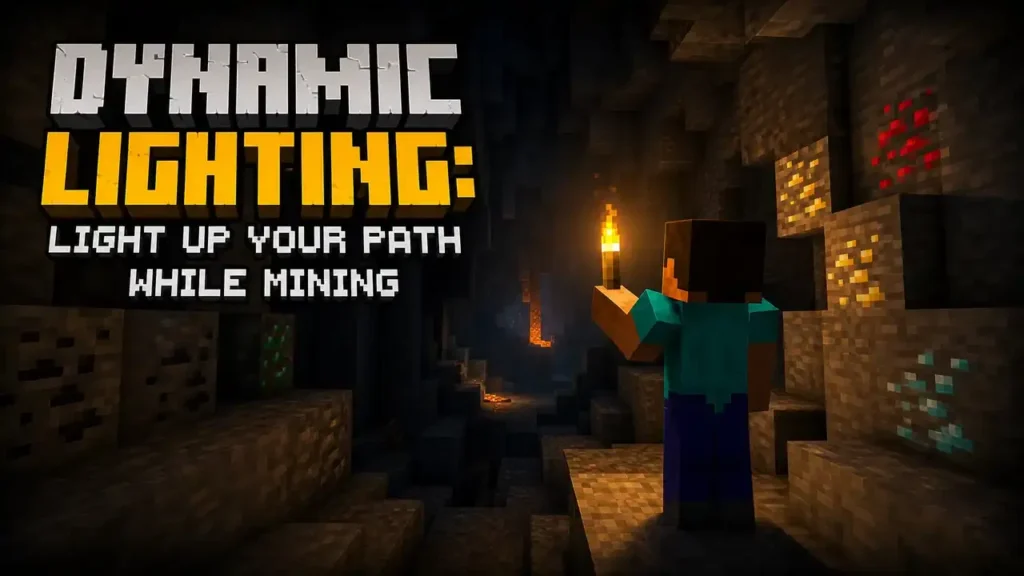
- Dynamic lighting for handheld light sources.
- Connected textures for smoother block designs.
- Better grass and better snow rendering.
- Custom skies, colors, and fonts.
- Smart animations that reduce unnecessary rendering.
- Anti-aliasing and anisotropic filtering for sharper visuals.
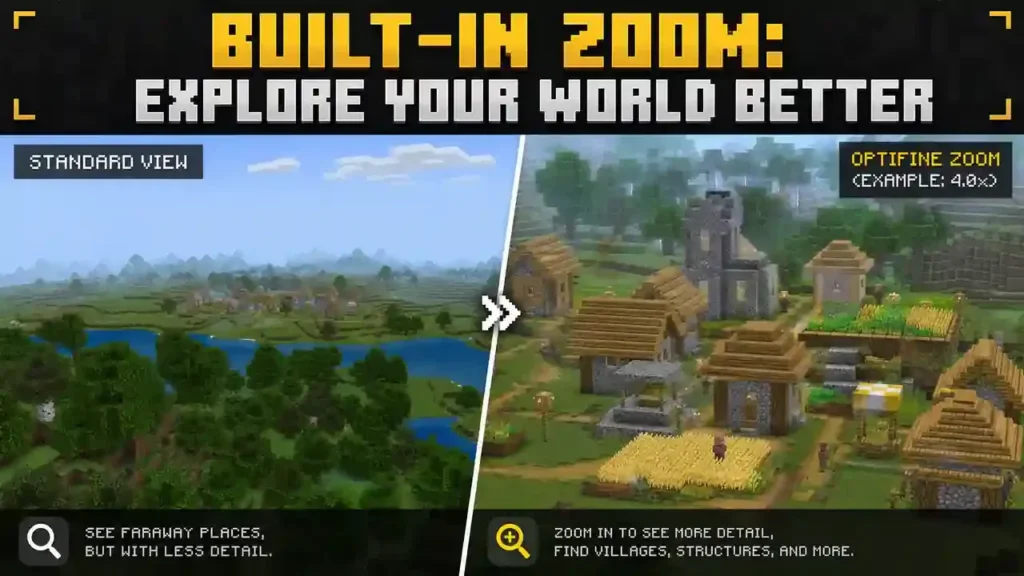
- Integrated zoom for easier exploration and building.
- Support for custom entity models, emissive textures, and Custom Item Textures (CIT).
Another reason players recommend this OptiFine guide is its broad platform support. OptiFine 1.18.2 works on Windows, macOS, and Linux, provided you install the correct version of Minecraft Java Edition and Java 17. It also integrates with the official Minecraft Launcher and supports compatible Forge installations for players who want performance improvements alongside other mods.
Over the years, OptiFine has evolved from a simple FPS optimization tool into a complete graphics enhancement solution. Every major release introduces compatibility updates, bug fixes, and new optimization techniques that match the latest Minecraft version. For Minecraft 1.18.2, the final stable releases—HD U H6, H7, and H9—improve compatibility, stability, and overall gameplay while maintaining support for modern shader packs and HD textures. Today, OptiFine remains one of the first downloads for many Minecraft Java Edition players. Its combination of performance improvements, visual enhancements, and extensive customization makes it an essential tool for anyone who wants a smoother and more immersive Minecraft experience.
What’s New in OptiFine 1.18.2?
OptiFine 1.18.2 received several updates after its first release. Each version focused on improving stability, fixing bugs, and expanding compatibility with Minecraft Java Edition 1.18.2. The final stable releases—HD U H6, HD U H7, and HD U H9—made the mod more reliable for everyday gameplay, shader support, and Forge integration. Instead of adding new gameplay features, these updates refined performance and solved issues reported by the community. This approach helped OptiFine remain one of the most trusted optimization tools for Minecraft.
OptiFine HD U H6
HD U H6 marked one of the first stable builds for Minecraft 1.18.2. It gave players a reliable version after the game’s release and laid the foundation for future updates.
Key improvements included:
- Better compatibility with Minecraft 1.18.2.
- Improved FPS optimization.
- More stable shader support.
- Better handling of HD resource packs.
- Fixed rendering issues in certain environments.
- Improved overall game stability.
This version became the starting point for many players upgrading from Minecraft 1.18.1.
OptiFine HD U H7
HD U H7 focused on refinement rather than major changes. The update fixed several compatibility problems and improved support for mods and shader packs.
Highlights included:
- Better Forge compatibility.
- Improved shader rendering.
- Reduced graphical glitches.
- Better chunk rendering performance.
- Improved memory management.
- Additional bug fixes reported by players.
These improvements made gameplay smoother, especially in large survival worlds and heavily customized installations.
OptiFine HD U H9
HD U H9 is the latest stable release for Minecraft OptiFine 1.18.2. It builds on earlier updates with additional fixes and optimizations.
Major improvements include:
- Improved overall stability.
- Better compatibility with the latest Forge builds.
- Updated shader support.
- Improved rendering performance.
- Better compatibility with HD textures.
- Minor optimization improvements.
- Various bug fixes and stability patches.
For most players, HD U H9 offers the best balance of performance, compatibility, and reliability.
Version History at a Glance
| Version | Main Focus | Best For |
|---|---|---|
| HD U H6 | Initial stable release | General gameplay |
| HD U H7 | Compatibility and bug fixes | Forge users and shader players |
| HD U H9 | Final stability update | Most recommended version |
Important Improvements Across All Releases
Although each update looks small, together they deliver noticeable improvements.
Better Performance
Every release improved rendering efficiency. The game loads chunks faster, maintains smoother frame rates, and reduces lag during exploration.
Improved Compatibility
The newer versions work better with Minecraft Java Edition 1.18.2, Java 17, compatible Forge releases, and many popular shader packs.
More Stable Graphics
Visual bugs became less common. Players experience smoother lighting, cleaner textures, and more consistent rendering.
Better Shader Experience
Shader packs load more reliably. Lighting effects, shadows, reflections, and water rendering work more smoothly across supported shader packs.
Ongoing Bug Fixes
Each update resolved issues discovered after earlier releases. This includes rendering glitches, graphical artifacts, and compatibility problems with certain configurations. Because of these improvements, OptiFine HD U H9 remains the recommended choice for players who want the most stable experience on Minecraft 1.18.2.
Why Should You Use OptiFine?
Minecraft runs well on many computers, but larger worlds, higher render distances, and detailed graphics can reduce performance. OptiFine 1.18.2 solves these problems while giving you much more control over how the game looks and performs. Whether you play on a budget laptop or a high-end gaming PC, OptiFine helps you customize Minecraft for your hardware.
Get Higher FPS
The biggest reason players install OptiFine is better performance. OptiFine optimizes Minecraft’s rendering system to reduce unnecessary workload. As a result, many players notice smoother gameplay and more stable frame rates.
Benefits include:
- Higher FPS.
- Less lag.
- Faster chunk loading.
- Reduced stuttering.
- Better world rendering.
- Smoother exploration.
This makes exploring huge caves and mountain biomes much more enjoyable.
Improve Graphics Without Sacrificing Performance
OptiFine adds advanced graphics settings that vanilla Minecraft does not offer.
You can customize:
- Render distance.
- Lighting quality.
- Particle effects.
- Animations.
- Clouds.
- Fog.
- Water quality.
- Texture filtering.
This flexibility lets you find the perfect balance between visual quality and performance.
Enjoy Beautiful Shader Packs
One of the most popular OptiFine features is built-in shader support. With just a few clicks, you can install shader packs that completely transform Minecraft’s appearance.
Shaders can add:
- Realistic shadows.
- Dynamic lighting.
- Better water.
- Volumetric clouds.
- Reflections.
- Improved sunsets.
- Enhanced weather effects.
OptiFine supports many well-known shader packs, including BSL, Complementary, SEUS, and Sildur’s Vibrant Shaders.
Use High-Resolution Resource Packs
Many HD resource packs require OptiFine to work correctly.
OptiFine improves texture handling and supports advanced resource pack features such as:
- HD textures.
- Connected textures.
- Emissive textures.
- Custom item textures.
- Custom entity models.
- Better sky rendering.
These features make Minecraft look richer without changing its core gameplay.
Built-in Zoom
The built-in Zoom feature remains one of OptiFine’s simplest but most useful tools.
Instead of crafting a telescope or installing another mod, you can zoom in instantly to:
- Scout distant terrain.
- Find villages.
- Spot hostile mobs.
- Inspect detailed builds.
- Aim more accurately.
Many players use this feature every time they play.
Better Performance Across Different Hardware
OptiFine works well on many types of computers. If you own a powerful gaming PC, you can increase graphics quality while maintaining smooth gameplay. If your computer has older hardware, you can lower demanding settings and gain a noticeable FPS boost. The advanced graphics options give you full control over how Minecraft uses your system resources.
Dynamic Lighting Makes Exploration Easier
Dynamic Lighting allows certain light sources to illuminate your surroundings while you hold them. For example, torches, lanterns, and other supported items can light dark caves before you place them. This feature makes underground exploration safer and more convenient.
A Great Choice for Low-End PCs
Players with older computers often benefit the most from Minecraft OptiFine 1.18.2. Instead of struggling with constant lag, you can adjust settings that reduce the load on your CPU and GPU.
Many players improve performance by changing options such as:
- Render distance.
- Simulation distance.
- Smooth FPS.
- Fast Render.
- Smart Animations.
- Dynamic Updates.
- Chunk loading settings.
These adjustments help Minecraft run more smoothly without removing the game’s core experience.
More Control Over Your Minecraft Experience
Unlike vanilla Minecraft, OptiFine gives you complete control over performance and graphics. You decide whether to prioritize maximum FPS, stunning visuals, or a balance between both. That flexibility explains why millions of Minecraft Java Edition players continue to install OptiFine with every major game update. It remains one of the easiest ways to improve both performance and visual quality without changing how Minecraft feels to play.
Complete Feature Breakdown
OptiFine 1.18.2 offers much more than an FPS boost. It includes dozens of tools that improve graphics, increase performance, and give you full control over Minecraft Java Edition. Whether you play on a low-end laptop or a powerful gaming PC, these features help you build the experience that fits your hardware and play style. Below is a detailed look at every major OptiFine feature and how it improves your game.
Dynamic Lighting
Dynamic Lighting lets light-emitting items brighten the world while you hold them. You no longer need to place a torch every few steps to see in dark areas.
Supported light sources include:
- Torches
- Lanterns
- Glowstone
- Sea Lanterns
- Jack o’Lanterns
- Blaze Rods (depending on configuration)
This feature makes cave exploration faster and safer. It also improves visibility during nighttime adventures without changing Minecraft’s core mechanics.
Best for:
- Cave exploration
- Mining
- Survival mode
- Adventure maps
Connected Textures
Connected Textures remove visible borders between matching blocks. Instead of repeating patterns, textures blend together naturally.
This feature improves the appearance of blocks such as:
- Glass
- Bookshelves
- Sandstone
- Stone bricks
- Decorative blocks
Many HD resource packs rely on Connected Textures to create seamless designs.
Benefits
- Cleaner buildings
- More realistic structures
- Better-looking interiors
- Improved resource pack support
Better Grass
Vanilla Minecraft often shows dirt textures on the sides of grass blocks. Better Grass replaces those dirt edges with full grass textures. The result looks cleaner and more natural, especially in large landscapes. Players who enjoy building or taking screenshots will notice the difference immediately.
Better Snow
Better Snow places snow layers over blocks that normally appear uncovered. This creates smoother winter landscapes without changing gameplay. Snow-covered forests, villages, and mountains look far more realistic.
Custom Sky
Custom Sky replaces Minecraft’s default sky with detailed sky textures provided by supported resource packs.
Depending on the pack, you may see:
- Better sunrise effects
- Improved sunsets
- High-resolution stars
- Realistic moons
- Animated skies
This feature adds atmosphere without affecting gameplay mechanics.
HD Textures
One of the biggest reasons players install Minecraft OptiFine 1.18.2 is HD texture support. Vanilla Minecraft works best with lower-resolution textures. OptiFine allows much higher resolutions while maintaining smooth performance.
Supported resolutions include:
- 64×64
- 128×128
- 256×256
- 512×512
- Higher resolutions, depending on your hardware
HD textures make blocks, tools, armor, and mobs appear sharper and more detailed.
HD Fonts
HD Fonts improve the appearance of Minecraft’s text. Resource packs can replace the default font with cleaner, sharper versions. This makes menus, signs, books, and chat easier to read at higher resolutions.
Random Entities
Random Entities give mobs different appearances using supported resource packs. Instead of seeing identical cows or villagers everywhere, you may notice unique textures for each one. This feature creates a more varied and immersive world.
Common supported entities include:
- Villagers
- Cows
- Sheep
- Zombies
- Skeletons
- Cats
Custom Entity Models
Custom Entity Models (CEM) let resource packs replace default mob models with new designs. Instead of changing only textures, CEM can completely reshape creatures. Many modern resource packs use this feature to create unique animals, monsters, and NPCs.
Emissive Textures
Emissive Textures allow certain parts of a texture to glow in dark environments.
Examples include:
- Mob eyes
- Glowing ores
- Magical items
- Decorative blocks
These glowing effects improve visibility while creating a more immersive atmosphere.
Custom Colors
Custom Colors let resource packs replace Minecraft’s default color palette.
This affects many parts of the game, including:
- Grass
- Water
- Leaves
- Fog
- Sky
- Potion colors
- Lighting
The result creates more vibrant and realistic environments.
Clear Water
Clear Water increases underwater visibility by reducing water opacity. Oceans, rivers, and lakes become much easier to explore. Players can spot underwater caves, structures, and mobs from a greater distance.
Smart Animations
Smart Animations improve performance by stopping animations you cannot currently see. Instead of rendering every animated texture at once, OptiFine updates only visible animations. This reduces unnecessary GPU usage and helps improve FPS, especially on older systems.
Anti-Aliasing
Anti-Aliasing smooths jagged edges on blocks, structures, and objects. It creates cleaner lines and improves image quality. Higher Anti-Aliasing levels look better but require more graphics power. High-end systems benefit the most from this feature.
Anisotropic Filtering
Anisotropic Filtering keeps distant textures sharp instead of blurry. Roads, floors, and terrain remain detailed even when viewed from an angle. This feature works especially well with HD resource packs.
Zoom Feature
The built-in Zoom feature is one of OptiFine’s most popular tools. With a single key press, you can zoom in without installing another mod.
Players use Zoom to:
- Spot villages
- Find structures
- Watch hostile mobs
- Build with precision
- Explore distant terrain
It offers convenience without changing the game’s balance.
Natural Textures
Natural Textures rotate supported block textures automatically. This removes obvious repeating patterns across large builds. Blocks such as stone, sand, and wood appear more natural without requiring new textures. Builders often enable this feature for better visual variety.
Shader Support
Shader support is one of the defining features of OptiFine 1.18.2. OptiFine includes built-in support for many popular shader packs.
Shaders can add:
- Dynamic shadows
- Global illumination
- Water reflections
- Waving vegetation
- Volumetric clouds
- Better lighting
- Realistic weather
Popular shader packs include:
- BSL Shaders
- Complementary Shaders
- Sildur’s Vibrant Shaders
- SEUS Renewed
- Chocapic13
You can enable or disable shaders directly from the video settings menu.
CIT Support
Custom Item Textures (CIT) allow resource packs to assign unique textures to individual items.
For example, two diamond swords can look different based on:
- Name
- Enchantments
- Durability
- Custom resource pack rules
Many adventure maps and RPG-style resource packs depend on CIT support.
Fast Render
Fast Render reduces rendering overhead by simplifying how Minecraft processes graphics. It often improves FPS on low-end and mid-range systems. However, some shader packs require Fast Render to remain disabled. Choose the setting based on your graphics configuration.
Fast Math
Fast Math speeds up mathematical calculations inside Minecraft. It reduces CPU workload during gameplay. Many players see smoother performance without noticeable visual changes. This option works especially well on older processors.
Render Regions
Render Regions divide the world into smaller rendering sections. Instead of updating the entire screen at once, Minecraft processes smaller regions independently. This improves rendering efficiency and helps maintain stable FPS while exploring large worlds. Modern GPUs benefit the most from this optimization.
Dynamic Updates
Dynamic Updates control how frequently chunks refresh while you move through the world. When enabled, nearby chunks update more efficiently during gameplay. This creates smoother exploration and reduces sudden frame drops. Players who travel long distances often notice the biggest improvement.
Chunk Loading
Chunk Loading determines how quickly Minecraft generates and displays new terrain. OptiFine optimizes this process to reduce loading delays and stuttering.
The improvements become especially noticeable when:
- Flying with Elytra
- Exploring new biomes
- Traveling by boat
- Using high render distances
- Playing on large survival worlds
Faster chunk loading creates a smoother experience and helps maintain consistent FPS during exploration. Together, these features make OptiFine 1.18.2 much more than an optimization mod. It combines advanced performance tuning, powerful graphics enhancements, and deep customization into a single package. Whether your goal is maximum FPS, stunning visuals, or balanced gameplay, OptiFine provides the tools to tailor Minecraft to your hardware and preferences.
OptiFine 1.18.2 Version History
OptiFine 1.18.2 went through several updates before reaching its final stable release. Each version focused on improving stability, fixing reported bugs, and increasing compatibility with Minecraft Java Edition 1.18.2. Instead of adding new gameplay mechanics, the updates refined performance, graphics, and shader support. If you want the most reliable experience, install the latest stable release. Earlier versions remain useful if you need compatibility with a specific mod or testing environment.
OptiFine 1.18.2 Release History
| Version | Release Status | Major Changes |
|---|---|---|
| HD U H6 | Stable | Initial stable release for Minecraft 1.18.2, improved FPS optimization, better shader compatibility, support for HD resource packs, rendering improvements, and bug fixes. |
| HD U H7 | Stable | Improved Forge compatibility, fixed rendering glitches, enhanced memory management, smoother chunk rendering, additional shader fixes, and stability improvements. |
| HD U H9 | Final Stable | Latest and most stable release. Includes better overall performance, improved compatibility with Forge, updated shader support, optimized rendering, better HD texture support, and numerous bug fixes. |
OptiFine HD U H6
HD U H6 became one of the first stable builds for Minecraft 1.18.2. It gave players a dependable version after the game’s release and introduced the core optimizations expected from OptiFine.
Key improvements included:
- Stable support for Minecraft 1.18.2.
- Better FPS on most hardware.
- Improved rendering performance.
- More reliable shader loading.
- Better compatibility with HD resource packs.
- Fixed several graphical issues.
For many players, H6 served as the foundation for later updates.
OptiFine HD U H7
HD U H7 focused on refining the experience rather than adding new features. It addressed community feedback and solved several compatibility issues.
Major improvements included:
- Better compatibility with compatible Forge versions.
- Improved shader rendering.
- Reduced graphical artifacts.
- Better chunk rendering.
- More efficient memory usage.
- Increased game stability.
Players using large modpacks or high-resolution resource packs often experienced smoother gameplay after upgrading to H7.
OptiFine HD U H9
HD U H9 is the latest and most recommended version for Minecraft OptiFine 1.18.2. It combines all previous improvements with additional optimization and stability updates.
Highlights include:
- Better rendering efficiency.
- Improved compatibility with newer Forge builds.
- More reliable shader support.
- Better handling of HD textures.
- Reduced crashes.
- Improved stability during long play sessions.
- Various bug fixes reported by the community.
Unless you need an older version for compatibility reasons, HD U H9 is the best choice for Minecraft 1.18.2.
Which Version Should You Download?
For almost every player, OptiFine HD U H9 offers the best experience.
Choose H9 if you want:
- Maximum stability.
- Better FPS.
- Updated shader compatibility.
- Improved Forge support.
- Better support for modern resource packs.
Only use H6 or H7 if a specific mod, launcher, or server recommends them.
System Requirements
One of the biggest advantages of OptiFine 1.18.2 is its broad hardware support. It runs on the same systems as Minecraft Java Edition while adding powerful optimization features. In many cases, OptiFine helps older computers perform better than the vanilla game. Before installing Minecraft OptiFine 1.18.2, make sure your system meets the following requirements.
Operating System
OptiFine supports all major desktop operating systems.
| Operating System | Supported |
|---|---|
| Windows 10 | ✅ Yes |
| Windows 11 | ✅ Yes |
| macOS | ✅ Yes |
| Linux | ✅ Yes |
The installation process is similar across all platforms, although Java file handling may differ slightly.
Java Requirements
Minecraft 1.18.2 requires Java 17. Installing the correct Java version is essential because the OptiFine installer runs as a Java application.
Recommended version:
- Java 17 (64-bit)
- Latest Java 17 updates
- Official Java distribution or another trusted Java 17 build
Using an older Java version may cause installation failures or game crashes.
RAM Requirements
OptiFine works on systems with different amounts of memory.
| RAM | Experience |
|---|---|
| 2 GB | Playable with low settings and short render distance |
| 4 GB | Good for vanilla gameplay and light resource packs |
| 8 GB | Recommended for most players |
| 16 GB or more | Ideal for shaders, HD textures, and larger worlds |
Allocating too much RAM does not always improve performance. Most players achieve the best results by assigning only the amount needed for their setup.
CPU Requirements
OptiFine improves performance on both older and newer processors.
Recommended processors include:
- Intel Core i3 or newer.
- AMD Ryzen 3 or newer.
- Apple Silicon processors for macOS.
- Modern multi-core CPUs.
Faster processors generally improve chunk generation, world loading, and overall game responsiveness.
GPU Requirements
OptiFine supports most graphics hardware compatible with Minecraft Java Edition.
Examples include:
- Intel UHD Graphics.
- Intel Iris Xe Graphics.
- NVIDIA GeForce GTX and RTX series.
- AMD Radeon RX series.
- Apple integrated graphics.
A dedicated graphics card delivers the best results with shader packs and high-resolution resource packs. Integrated graphics can still benefit from OptiFine’s optimization settings.
Storage Requirements
OptiFine itself requires very little storage space.
Typical requirements include:
- Minecraft Java Edition installed.
- OptiFine JAR file.
- A few hundred megabytes of free space for configuration files and shader packs.
If you plan to install multiple resource packs or high-quality shaders, reserve several additional gigabytes for those files.
Internet Connection
You only need an internet connection to:
- Download OptiFine.
- Download Java updates.
- Install shader packs.
- Download resource packs.
- Access multiplayer servers.
Once installed, OptiFine works offline in single-player mode.
Recommended Hardware for the Best Experience
For smooth gameplay with shaders and HD textures, a balanced system works best.
| Component | Recommended |
|---|---|
| Operating System | Windows 11, Windows 10, macOS, or Linux |
| Java | Java 17 (64-bit) |
| RAM | 8 GB or more |
| CPU | Modern quad-core processor |
| GPU | Dedicated NVIDIA or AMD graphics card |
| Storage | SSD with available free space |
Meeting these recommendations allows Minecraft OptiFine 1.18.2 to deliver higher FPS, faster chunk loading, smoother shader performance, and improved overall stability, especially when using HD resource packs or exploring large Minecraft worlds.
Which Java Version Does OptiFine 1.18.2 Need?
Installing the correct Java version is one of the most important steps before using Minecraft OptiFine 1.18.2. Even if you download the correct OptiFine installer, it will not work without a compatible Java Runtime. Since Minecraft Java Edition 1.18.2 runs on Java 17, OptiFine also requires Java 17 for proper installation and gameplay. If you use an older Java version, you may see installation errors, launcher issues, or game crashes.
Why Does OptiFine Need Java 17?
OptiFine installs as a Java Archive (JAR) file. Your computer uses the Java Runtime Environment (JRE) to open this file and complete the installation. Minecraft 1.18.2 also relies on Java 17 for its game engine. Using the same Java version ensures full compatibility between Minecraft and OptiFine. If Java is missing or outdated, the installer cannot launch correctly.
Use the 64-Bit Version of Java
Always install the 64-bit version of Java 17 unless your computer runs a 32-bit operating system.
A 64-bit Java installation offers several advantages:
- Better performance.
- Improved memory management.
- Support for larger Minecraft worlds.
- Better shader compatibility.
- More stable gameplay.
- Fewer memory-related crashes.
Most modern Windows, macOS, and Linux systems already support 64-bit applications.
What Is the Java Runtime?
The Java Runtime Environment (JRE) provides everything needed to run Java applications.
When you double-click the OptiFine installer, the Java Runtime:
- Opens the JAR file.
- Starts the installer.
- Creates the OptiFine profile.
- Prepares Minecraft for launch.
Without Java Runtime, your operating system cannot recognize or execute the installer.
How to Check Your Java Version
Before installing OptiFine, confirm that Java 17 is already installed.
On Windows:
- Open Command Prompt.
- Type:
java -version
If Java is installed correctly, you should see Java 17 listed in the output. If the command is not recognized, Java is either missing or not added to your system path. On macOS or Linux, you can run the same command in Terminal.
Common Java Problems and Solutions
Many installation problems happen because Java is missing or configured incorrectly. Fortunately, most issues are easy to fix.
“Java Is Not Recognized”
This error usually means Java is not installed or the system cannot find it.
Solution
- Install Java 17 (64-bit).
- Restart your computer if needed.
- Verify the installation using
java -version.
OptiFine JAR File Opens as an Archive
Some computers associate JAR files with archive software instead of Java.
Solution
- Install Java 17.
- Open the file using Java Platform SE Binary.
- Reset the default application for JAR files if necessary.
Installer Does Not Open
If nothing happens after double-clicking the installer, Java may not be installed correctly.
Possible causes include:
- Missing Java Runtime.
- Outdated Java version.
- Corrupted Java installation.
- Incorrect file association.
Reinstalling Java 17 usually resolves this problem.
Minecraft Crashes After Installing OptiFine
Several factors can trigger crashes.
Common causes include:
- Wrong Java version.
- Outdated graphics drivers.
- Incompatible Forge version.
- Conflicting mods.
- Corrupted shader pack.
Always update Java before troubleshooting other issues.
Exit Code 1
Exit Code 1 is one of the most common Minecraft errors.
It often appears because of:
- Incorrect Java installation.
- Unsupported Java version.
- Broken mods.
- Incorrect JVM arguments.
- Damaged game files.
Using Java 17 and removing incompatible mods solves this problem in many cases.
Java Runs Out of Memory
Players sometimes allocate too little or too much RAM.
This can cause:
- Freezing.
- Lag spikes.
- Game crashes.
- Slow chunk loading.
Allocate enough memory for your setup without assigning excessive amounts.
Best Java Setup for OptiFine 1.18.2
For the smoothest experience, use:
- Java 17.
- 64-bit Java Runtime.
- Latest Java updates.
- Official Minecraft Launcher.
- Latest stable OptiFine release.
- Updated graphics drivers.
This combination provides excellent compatibility with shaders, Forge, HD resource packs, and large Minecraft worlds.
Is OptiFine 1.18.2 Safe?
Many first-time users ask the same question: Is OptiFine 1.18.2 safe? The short answer is yes—provided you download it from the official OptiFine website. OptiFine has served the Minecraft Java Edition community for many years and remains one of the most widely used optimization mods. However, fake download sites, modified installers, and misleading advertisements have created confusion. Knowing where to download OptiFine helps you avoid unnecessary risks.
Download Only From the Official Website
The safest place to download Minecraft OptiFine 1.18.2 is the official OptiFine website.
Official downloads provide:
- Original installer files.
- Latest stable releases.
- Previous versions.
- Official changelogs.
- Mirror downloads maintained by the OptiFine team.
Avoid websites that repackage or modify the installer.
Does OptiFine Contain Viruses?
The official OptiFine installer does not contain malware or viruses. Millions of Minecraft players have installed OptiFine over many years without security issues from the official download.
Security concerns usually come from:
- Fake download websites.
- Modified installers.
- Bundled software.
- Fake advertisements.
- Unofficial mirrors.
Downloading from trusted sources greatly reduces these risks.
Why Do Some Antivirus Programs Show Warnings?
Some antivirus programs flag OptiFine because the installer is less common than mainstream software. This type of alert does not automatically mean the file is malicious.
Possible reasons include:
- Low download reputation.
- Installer behavior.
- Heuristic scanning.
- Unsigned executable components used during installation.
If you downloaded the file from the official website and verified the filename, these warnings are often false positives.
Understanding Malware Myths
Many online rumors claim OptiFine contains spyware or hidden malware. These claims usually involve unofficial downloads rather than the genuine installer.
Remember these simple rules:
- Never download OptiFine from random file-sharing sites.
- Avoid installers bundled with extra software.
- Ignore fake “faster” versions.
- Do not trust unofficial launchers that modify OptiFine files.
Using the official installer eliminates most security concerns.
Digital Signatures and File Integrity
The OptiFine installer is distributed as a Java JAR file rather than a traditional Windows executable. When you download it from the official source, the file remains unchanged from its original release.
To protect yourself:
- Download only from the official website.
- Avoid renamed installers.
- Check that the version matches your Minecraft release.
- Do not modify the JAR file before installation.
These simple checks help ensure you install the authentic version.
Trusted by the Minecraft Community
OptiFine has earned the trust of the Minecraft community through years of consistent updates and reliable performance.
It is widely used by:
- Survival players.
- PvP players.
- Builders.
- Content creators.
- Shader enthusiasts.
- Modpack users.
Many popular resource packs and shader packs even recommend OptiFine because of its advanced graphics features and broad compatibility. Its long development history and large user base make it one of the most recognized optimization tools for Minecraft Java Edition.
Safety Best Practices
Before installing OptiFine, follow these recommendations:
- Download from the official OptiFine website.
- Use the latest stable release for Minecraft 1.18.2.
- Install Java 17 (64-bit).
- Keep your graphics drivers updated.
- Scan downloaded files if you want extra peace of mind.
- Avoid unofficial mirrors unless they are linked by the OptiFine website.
Following these steps helps you enjoy OptiFine 1.18.2 safely while getting the best performance and graphics for Minecraft Java Edition.
How to Download OptiFine 1.18.2
Downloading Minecraft OptiFine 1.18.2 takes only a few minutes when you use the official source. The correct installer gives you the latest features, better stability, and full compatibility with Minecraft Java Edition 1.18.2.
Follow the steps below to download the correct version safely.
Step 1: Visit the Official OptiFine Website
Open your web browser and visit the official OptiFine Downloads page. Locate the version for Minecraft 1.18.2. Choose the latest stable release, which is OptiFine HD U H9. If H9 is unavailable for any reason, you can also use HD U H7 or HD U H6.
Step 2: Choose the Download Option
You will usually see two download options.
Download
The Download button redirects through an advertisement page before the file becomes available. Wait a few seconds, then click Skip to reach the installer.
Mirror
The Mirror option skips the advertisement page and takes you directly to the download page. Many players prefer this option because it is faster and simpler. Both options provide the same official installer.
Step 3: Download the Installer
Click the download button to save the OptiFine 1.18.2 JAR file.
The file name looks similar to:
OptiFine_1.18.2_HD_U_H9.jar
Save the file somewhere easy to find, such as:
- Downloads folder
- Desktop
- Minecraft folder
Step 4: Verify the Download
Before opening the installer, confirm that:
- The version is Minecraft 1.18.2.
- The release matches HD U H9 (or another supported version).
- The file extension is .jar.
- Java 17 is already installed.
These checks help prevent installation problems later.
Avoid Fake Download Websites
Many unofficial websites copy the OptiFine name to attract downloads.
Some of these sites include:
- Modified installers.
- Outdated versions.
- Extra software bundles.
- Fake download buttons.
- Misleading advertisements.
To stay safe:
- Download only from the official OptiFine website.
- Ignore websites promising “faster” or “premium” versions.
- Avoid downloading ZIP or EXE files that claim to be OptiFine.
- Do not install software that asks for unrelated permissions.
Download Checklist
Before moving to installation, make sure you have:
- Minecraft Java Edition 1.18.2 installed.
- Java 17 (64-bit) installed.
- OptiFine HD U H9 downloaded.
- Stable internet connection.
- Enough free storage space.
- Administrator access if required by your operating system.
Once everything is ready, you can install OptiFine in just a few minutes.
How to Install OptiFine 1.18.2 on Windows
How to Install OptiFine in Minecraft 1.18.2 on Windows is straightforward. The installer automatically creates a new Minecraft profile that you can launch from the official Minecraft Launcher.
Step 1: Install Minecraft 1.18.2
Open the Minecraft Launcher once before installing OptiFine. Launch Minecraft Java Edition 1.18.2 at least one time. Close the game after it reaches the main menu. This step downloads the required game files.
Step 2: Install Java 17
If Java is not installed, download and install Java 17 (64-bit). Without Java, Windows cannot open the OptiFine installer.
Step 3: Open the OptiFine Installer
Locate the downloaded file.
Example:
OptiFine_1.18.2_HD_U_H9.jar
Double-click the file.
If Java is installed correctly, the OptiFine installer will open.
Step 4: Start the Installation
Inside the installer:
- Verify the Minecraft folder location.
- Click Install.
- Wait a few seconds.
- A confirmation message will appear.
The installer automatically creates a new OptiFine profile.
Step 5: Open Minecraft Launcher
Launch the official Minecraft Launcher. Click the installation selector. Choose the new OptiFine profile. If you do not see it immediately, restart the launcher.
Step 6: Launch Minecraft
Click Play.
Minecraft will load using OptiFine. The first launch may take slightly longer while the game creates configuration files.
Step 7: Verify the Installation
Once Minecraft starts:
- Open the main menu.
- Look in the lower-left corner.
You should see something similar to:
Minecraft 1.18.2 (OptiFine HD_U_H9)
You can also open:
Options → Video Settings
If you see additional OptiFine settings, the installation completed successfully.
Troubleshooting Windows Installation
If the installer does not open:
- Confirm Java 17 is installed.
- Make sure the file ends with .jar.
- Right-click the file and choose Open with → Java Platform SE Binary.
- Re-download the installer if the file appears corrupted.
How to Install OptiFine 1.18.2 on macOS
Installing OptiFine on macOS follows the same basic process as Windows.
Step 1: Install Minecraft Java Edition
Launch Minecraft 1.18.2 once.
Close the game after it loads.
Step 2: Install Java 17
Download and install Java 17 if it is not already available.
You can verify the installation by opening Terminal and running:
java -version
Step 3: Download OptiFine
Download the latest OptiFine HD U H9 installer.
Save the JAR file to your Downloads folder.
Step 4: Run the Installer
Double-click the JAR file.
If macOS asks for confirmation, allow the application to open.
The installer window should appear.
Step 5: Install OptiFine
Click Install.
Wait until the installation completes.
Step 6: Launch Minecraft
Open Minecraft Launcher.
Select the OptiFine profile.
Start the game.
Open Video Settings to confirm OptiFine is active.
macOS Tips
If the installer does not open:
- Verify Java 17 is installed.
- Check file permissions.
- Open the installer using Terminal if needed.
- Update macOS to the latest supported version.
How to Install OptiFine 1.18.2 on Linux
OptiFine also works well on most Linux distributions.
The installation process remains almost identical.
Step 1: Install Minecraft
Run Minecraft Java Edition 1.18.2 once.
Exit the game.
Step 2: Install Java 17
Most Linux distributions allow Java installation through the package manager.
Verify the installation:
java -version
Step 3: Download OptiFine
Download the latest OptiFine HD U H9 JAR file.
Save it in your preferred directory.
Step 4: Run the Installer
Open a Terminal window.
Navigate to the download location.
Run:
java -jar OptiFine_1.18.2_HD_U_H9.jar
The installer window should appear.
Step 5: Install
Click Install.
Wait until the process finishes.
Step 6: Launch Minecraft
Open Minecraft Launcher.
Select the OptiFine profile.
Launch Minecraft.
Open Video Settings to confirm the installation.
Linux Troubleshooting
If the installer fails:
- Verify Java 17 is installed.
- Confirm the file name matches the downloaded version.
- Check file permissions.
- Make sure the JAR file downloaded completely.
How to Install OptiFine 1.18.2 Without Forge
Many players only want better FPS, shaders, and graphics. If that sounds like you, installing OptiFine without Forge is the easiest option.
You do not need any additional mod loader.
Step 1: Install Minecraft 1.18.2
Run Minecraft Java Edition 1.18.2 once.
Close the game.
Step 2: Download OptiFine
Download the latest stable release from the official website.
Step 3: Install Java 17
Install Java 17 if your computer does not already have it.
Step 4: Run the Installer
Open the OptiFine JAR file.
Click Install.
Wait for the confirmation message.
Step 5: Open Minecraft Launcher
Launch Minecraft.
Select the OptiFine installation profile.
Click Play.
Step 6: Confirm Everything Works
After Minecraft loads:
- Open Options.
- Click Video Settings.
- Check for OptiFine’s advanced graphics options.
- Verify the version shown on the main menu.
If these settings appear, OptiFine is installed correctly and ready to use.
Installing without Forge gives you the fastest setup and full access to OptiFine’s core features, including higher FPS, shader support, HD resource packs, Dynamic Lighting, Connected Textures, and advanced graphics settings. If you decide to use additional mods later, you can install a compatible version of Forge without reinstalling Minecraft.
Install OptiFine 1.18.2 With Forge
If you use mods alongside Minecraft OptiFine 1.18.2, installing OptiFine with Minecraft Forge is the best option. This setup lets you combine OptiFine’s performance improvements with many Forge-compatible mods in a single Minecraft installation. However, compatibility depends on the Forge version you use. Installing an unsupported version can lead to crashes, missing mods, or startup errors.
Does OptiFine 1.18.2 Work With Forge?
Yes. OptiFine 1.18.2 works with compatible Forge 1.18.2 releases. The latest OptiFine builds, especially HD U H9, offer the best compatibility and stability.
Keep these points in mind:
- Always use Minecraft 1.18.2.
- Install the latest stable OptiFine HD U H9 whenever possible.
- Download a Forge version compatible with Minecraft 1.18.2.
- Update both Forge and OptiFine if compatibility issues appear.
Using outdated versions may cause crashes or prevent Minecraft from loading.
Correct Installation Order
Installing everything in the proper order prevents most problems.
Follow these steps:
Step 1: Install Minecraft 1.18.2
Open Minecraft Launcher.
Launch Minecraft Java Edition 1.18.2 once.
Close the game.
Step 2: Install Java 17
Make sure Java 17 (64-bit) is installed.
Without Java, neither Forge nor OptiFine can install correctly.
Step 3: Install Forge
Download the Forge installer for Minecraft 1.18.2.
Run the installer.
Choose:
Install Client
Wait until Forge finishes installing.
Step 4: Launch Forge Once
Open Minecraft Launcher.
Select the Forge profile.
Launch the game.
Close Minecraft after it reaches the main menu.
This creates the required Forge folders.
Step 5: Install OptiFine
Open the OptiFine installer.
Click Extract if you only want the mod file, or install it normally and copy the generated JAR if needed for your setup.
For most Forge installations:
- Locate the OptiFine JAR file.
- Open your Minecraft mods folder.
- Copy the OptiFine JAR into that folder.
Do not unzip or modify the JAR file.
Step 6: Launch Minecraft
Open Minecraft Launcher.
Select the Forge profile.
Click Play.
Forge automatically loads OptiFine during startup.
Step 7: Verify the Installation
Once Minecraft loads:
- Open Mods.
- Confirm OptiFine appears in the installed mods list.
- Open Video Settings.
- Check that OptiFine’s advanced graphics options are available.
If everything appears correctly, the installation succeeded.
Common Forge Installation Problems
Even experienced players sometimes encounter issues when combining Forge and OptiFine. Here are the most common problems and their solutions.
Minecraft Crashes on Startup
Possible causes include:
- Wrong Forge version.
- Outdated OptiFine release.
- Conflicting mods.
- Unsupported shader packs.
Solution
- Update Forge.
- Install OptiFine HD U H9.
- Remove recently added mods.
- Test with only Forge and OptiFine installed.
OptiFine Does Not Load
If Minecraft starts but OptiFine features are missing:
Check that:
- The JAR file remains inside the mods folder.
- The file has not been renamed.
- The Forge profile is selected.
- Minecraft version matches OptiFine.
Exit Code 1
This error often results from:
- Java problems.
- Incompatible mods.
- Incorrect Forge version.
- Broken game files.
Remove unnecessary mods and verify Java 17 is installed before troubleshooting further.
Shader Packs Stop Working
Some mods modify Minecraft’s rendering engine.
These changes may conflict with OptiFine shaders.
If shaders stop working:
- Disable incompatible rendering mods.
- Update the shader pack.
- Use the latest OptiFine release.
Low FPS After Installing Forge
Forge loads additional mods that consume system resources.
Improve performance by:
- Reducing render distance.
- Lowering simulation distance.
- Enabling Smart Animations.
- Using Fast Math.
- Removing unused mods.
These adjustments often restore much of the lost performance.
Best Practices for Forge Users
For the smoothest experience:
- Use Minecraft 1.18.2.
- Install Java 17 (64-bit).
- Choose OptiFine HD U H9.
- Keep Forge updated.
- Install only trusted mods.
- Test new mods one at a time.
- Back up your worlds before adding large modpacks.
Following these steps reduces compatibility issues and helps maintain stable gameplay.
Install OptiFine 1.18.2 on Popular Launchers
Most Minecraft players use the official launcher, but many prefer third-party launchers for better mod management. Fortunately, OptiFine 1.18.2 works with several popular launchers, provided you install the correct Minecraft version and Java 17. Below are the most common installation methods.
Install on Minecraft Launcher
The official Minecraft Launcher provides the easiest installation process.
Steps
- Install Minecraft Java Edition 1.18.2.
- Launch the game once.
- Close Minecraft.
- Run the OptiFine installer.
- Click Install.
- Open Minecraft Launcher.
- Select the OptiFine profile.
- Click Play.
After launching, open Video Settings to confirm OptiFine is active.
This method works for most players.
Install on Prism Launcher
Prism Launcher offers excellent support for multiple Minecraft instances and advanced mod management.
Steps
- Create a new Minecraft 1.18.2 instance.
- Install Java 17 if needed.
- Open the instance settings.
- Add the OptiFine JAR as a mod or install it using Prism Launcher’s supported OptiFine workflow.
- Save your changes.
- Launch the instance.
Prism Launcher makes it easy to manage separate installations for vanilla Minecraft, Forge, Fabric, and OptiFine.
Install on MultiMC
MultiMC allows you to create isolated Minecraft instances without affecting your main game.
Steps
- Create a new Minecraft 1.18.2 instance.
- Install Java 17.
- Edit the instance.
- Add the OptiFine JAR using the loader or mod management options supported by MultiMC.
- Save the configuration.
- Launch Minecraft.
Using separate instances makes testing shaders, resource packs, and mods much safer.
Install on CurseForge Launcher
The CurseForge Launcher simplifies installing and managing Forge modpacks.
Steps
- Create a new Minecraft 1.18.2 profile.
- Install Forge.
- Open the profile folder.
- Locate the mods folder.
- Copy the OptiFine JAR into that folder.
- Launch the profile.
If a modpack already includes rendering optimization mods, check compatibility before adding OptiFine.
Install on TLauncher
TLauncher also supports OptiFine, although the setup differs slightly depending on the version.
Steps
- Install Minecraft 1.18.2.
- Install Java 17.
- Download the official OptiFine installer.
- Install OptiFine or use the launcher’s OptiFine profile if available.
- Launch Minecraft.
Only download OptiFine from the official website, even if you use a third-party launcher.
Which Launcher Should You Choose?
Each launcher serves a different type of player.
| Launcher | Best For |
|---|---|
| Minecraft Launcher | Beginners, vanilla players, and the easiest setup |
| Prism Launcher | Advanced users who manage multiple instances and mods |
| MultiMC | Players who want isolated game profiles and flexible mod management |
| CurseForge Launcher | Large Forge modpacks and simple mod updates |
| TLauncher | Users who already rely on this launcher and understand its limitations |
No matter which launcher you choose, always use:
- Minecraft Java Edition 1.18.2
- Java 17 (64-bit)
- The latest stable OptiFine release
- Compatible Forge versions when installing mods
This combination delivers the best balance of performance, stability, and compatibility.
Best OptiFine Settings for Maximum FPS
The default Minecraft settings do not work well for every computer. A low-end laptop and a high-end gaming PC need different graphics configurations to achieve the best results. One of the biggest advantages of Minecraft OptiFine 1.18.2 is that it gives you complete control over performance. You can adjust dozens of settings to increase FPS, reduce lag, and create smoother gameplay. The recommendations below balance performance and visual quality for different hardware levels.
Best Settings for Ultra Low-End PCs
These settings target older laptops, entry-level desktops, and systems with integrated graphics.
| Setting | Recommended Value |
|---|---|
| Graphics | Fast |
| Smooth Lighting | Off |
| Smooth Lighting Level | 0% |
| Render Distance | 6–8 Chunks |
| Simulation Distance | 5 Chunks |
| Entity Distance | 50% |
| Max Framerate | Unlimited |
| V-Sync | Off |
| View Bobbing | Off |
| Clouds | Off |
| Trees | Fast |
| Particles | Minimal |
| Entity Shadows | Off |
| Dynamic Lighting | Off |
| Dynamic Updates | On |
| Chunk Updates | 1 |
| Chunk Builder | Threaded |
| Render Regions | On |
| Smart Animations | On |
| Fast Render | On |
| Fast Math | On |
| Mipmap Levels | 0 |
| Anti-Aliasing | Off |
| Anisotropic Filtering | Off |
| Biome Blend | 0×0 |
| Shaders | Off |
Best for:
- Intel HD Graphics
- Older AMD APUs
- 2–4 GB RAM
- Budget laptops
Best Settings for Low-End PCs
These settings improve performance while keeping Minecraft visually appealing.
| Setting | Recommended Value |
|---|---|
| Graphics | Fast |
| Smooth Lighting | Minimum |
| Render Distance | 8–10 Chunks |
| Simulation Distance | 6 Chunks |
| Entity Distance | 75% |
| Particles | Decreased |
| Clouds | Fast |
| Dynamic Lighting | Fast |
| Smart Animations | On |
| Fast Render | On |
| Fast Math | On |
| Render Regions | On |
| Chunk Updates | 1 |
| Mipmap Levels | 2 |
| Anti-Aliasing | Off |
| Anisotropic Filtering | Off |
| Shaders | Off |
These settings provide a noticeable FPS boost while preserving most visual details.
Best Settings for Mid-Range PCs
Mid-range systems can balance graphics and performance without sacrificing smooth gameplay.
| Setting | Recommended Value |
|---|---|
| Graphics | Fancy |
| Smooth Lighting | Maximum |
| Render Distance | 12–16 Chunks |
| Simulation Distance | 8 Chunks |
| Entity Distance | 100% |
| Particles | Decreased |
| Dynamic Lighting | Fast |
| Smart Animations | On |
| Render Regions | On |
| Chunk Updates | 3 |
| Fast Math | On |
| Fast Render | On* |
| Mipmap Levels | 4 |
| Anti-Aliasing | 2x |
| Anisotropic Filtering | 4x |
| Shaders | Optional |
Note: Disable Fast Render if you use shader packs, as many shaders are incompatible with it.
Best Settings for High-End PCs
High-end hardware can deliver excellent visuals while maintaining high frame rates.
| Setting | Recommended Value |
|---|---|
| Graphics | Fancy |
| Smooth Lighting | Maximum |
| Render Distance | 20–24 Chunks |
| Simulation Distance | 12 Chunks |
| Entity Distance | 125% |
| Particles | All |
| Dynamic Lighting | Fancy |
| Smart Animations | On |
| Render Regions | On |
| Chunk Updates | 5 |
| Fast Math | On |
| Mipmap Levels | 4 |
| Anti-Aliasing | 4x |
| Anisotropic Filtering | 8x |
| Shaders | Recommended |
These settings work well for RTX, Radeon RX, and similar modern graphics cards.
Best Settings for Gaming PCs
Gaming systems can maximize Minecraft’s graphics while maintaining smooth performance.
| Setting | Recommended Value |
|---|---|
| Graphics | Fancy |
| Smooth Lighting | Maximum |
| Render Distance | 24–32 Chunks |
| Simulation Distance | 12–16 Chunks |
| Entity Distance | 150% |
| Particles | All |
| Dynamic Lighting | Fancy |
| Render Regions | On |
| Smart Animations | On |
| Chunk Updates | 5 |
| Fast Math | On |
| Mipmap Levels | 4 |
| Anti-Aliasing | 8x |
| Anisotropic Filtering | 16x |
| HD Resource Packs | Enabled |
| Shader Packs | Enabled |
These settings deliver the best visual experience when paired with modern hardware and sufficient RAM.
Extra Tips for Higher FPS
No matter what hardware you use, these tips can improve performance:
- Update your graphics drivers.
- Use Java 17 (64-bit).
- Close unnecessary background applications.
- Lower render distance before changing other settings.
- Disable shaders if FPS drops too much.
- Use the latest OptiFine HD U H9 release.
- Restart Minecraft after changing multiple graphics settings.
- Test one setting at a time to find the best balance.
Small adjustments often produce bigger FPS gains than changing everything at once.
Best Graphics Settings for OptiFine 1.18.2
OptiFine gives you much more control over Minecraft’s graphics than the vanilla game. Instead of relying on one preset, you can fine-tune individual settings to match your hardware and play style. The sections below explain the most important graphics options and how they affect both performance and image quality.
Graphic
The Graphics option controls the overall rendering style.
Fast
- Higher FPS.
- Simpler leaves.
- Less transparency.
- Best for older computers.
Fancy
- Better visuals.
- Transparent leaves.
- Improved water and clouds.
- Higher GPU usage.
Recommendation
- Low-end PCs: Fast
- Mid-range and Gaming PCs: Fancy
Smooth FPS
Smooth FPS helps reduce sudden frame drops by stabilizing frame delivery.
Benefits include:
- More consistent gameplay.
- Less stuttering.
- Better responsiveness.
Most players should keep this setting enabled.
Chunk Loading
Chunk Loading controls how Minecraft generates nearby terrain. OptiFine provides several methods that affect performance differently.
For most systems:
- Enable Threaded Chunk Builder.
- Keep Chunk Updates between 1 and 3.
- Enable Dynamic Updates for smoother movement.
These settings improve exploration without creating heavy CPU usage.
Render Distance
Render Distance determines how many chunks Minecraft displays around your character. Higher values create larger visible worlds but require more CPU and GPU power.
Recommended values:
| Hardware | Render Distance |
|---|---|
| Ultra Low-End | 6–8 Chunks |
| Low-End | 8–10 Chunks |
| Mid-Range | 12–16 Chunks |
| High-End | 20–24 Chunks |
| Gaming PC | 24–32 Chunks |
If your FPS drops, lowering Render Distance usually provides the biggest performance improvement.
Entity Distance
Entity Distance controls how far away mobs, animals, and other entities remain visible. Higher values increase realism but also require additional processing.
Recommended settings:
- Ultra Low-End: 50%
- Low-End: 75%
- Mid-Range: 100%
- High-End: 125%
- Gaming PC: 150%
Particles
Particles create visual effects such as smoke, fire, explosions, rain splashes, and potion effects.
Options include:
- Minimal
- Decreased
- All
For maximum FPS:
- Choose Minimal or Decreased.
For visual quality:
- Choose All.
Mipmap Levels
Mipmaps improve texture quality at longer viewing distances.
Recommended settings:
- Low-End PCs: 0–2
- Mid-Range PCs: 4
- High-End PCs: 4
Higher values create smoother textures but consume more GPU memory.
Lighting
Smooth Lighting affects shadows and block transitions.
Options include:
- Off
- Minimum
- Maximum
Recommendations:
- Older hardware: Off or Minimum
- Modern hardware: Maximum
Dynamic Lighting can also improve gameplay by illuminating your surroundings when holding light sources. Disable it on older systems if every FPS matters.
Performance Settings
OptiFine includes several advanced options that directly improve game performance.
| Setting | Recommendation |
|---|---|
| Fast Render | Enable unless using shaders |
| Fast Math | Enable |
| Smart Animations | Enable |
| Render Regions | Enable |
| Dynamic Updates | Enable |
| Lazy Chunk Loading* | Enable if available in your configuration |
| Smooth FPS | Enable |
| V-Sync | Disable unless you experience screen tearing |
These options reduce unnecessary rendering work and help maintain stable frame rates across most systems.
Finding the Right Balance
The best graphics settings depend on your hardware and priorities. If you want competitive gameplay, prioritize FPS by lowering demanding settings such as Render Distance, Particles, and Smooth Lighting. If you enjoy building, screenshots, or shader packs, increase visual quality gradually while monitoring your frame rate. OptiFine’s greatest strength is flexibility. With a few adjustments, you can tailor Minecraft OptiFine 1.18.2 to deliver smooth performance on older PCs or stunning graphics on modern gaming systems.
Best Shader Packs for OptiFine 1.18.2
One of the biggest reasons players install Minecraft OptiFine 1.18.2 is shader support. Shaders completely transform Minecraft’s lighting, shadows, water, skies, and overall atmosphere. With the right shader pack, even familiar worlds feel new. However, not every shader performs the same. Some focus on realistic graphics, while others balance visual quality with high FPS. Your hardware should guide your choice. Below are the best shader packs for OptiFine 1.18.2.
BSL Shaders
BSL Shaders remains one of the most popular choices in the Minecraft community. It delivers excellent graphics without demanding extreme hardware.
Highlights
- Realistic lighting
- Soft shadows
- Beautiful sunsets
- Volumetric clouds
- Better water reflections
- Vibrant colors
- Smooth performance
Pros
- Excellent balance of quality and FPS
- Highly customizable
- Great for survival worlds
- Works well on mid-range PCs
Cons
- Slight FPS reduction on older hardware
- Some settings require tweaking
Best for: Most players looking for the best balance between visuals and performance.
Complementary Shaders
Complementary Shaders builds on the BSL style while improving lighting and optimization. It has become one of the most recommended shader packs for Minecraft OptiFine 1.18.2.
Highlights
- Natural lighting
- Dynamic weather
- Realistic water
- Improved reflections
- Better shadows
- Customizable presets
Pros
- Excellent optimization
- Smooth gameplay
- Great compatibility
- Easy to configure
Cons
- High-quality presets require stronger GPUs
Best for: Players who want beautiful graphics with excellent FPS.
SEUS (Sonic Ether’s Unbelievable Shaders)
SEUS is famous for pushing Minecraft’s graphics to the next level.
It focuses on realism rather than maximum FPS.
Highlights
- Global illumination
- Realistic reflections
- High-quality shadows
- Advanced lighting
- Cinematic visuals
- Beautiful water rendering
Pros
- Stunning visuals
- Great for screenshots
- Amazing realism
Cons
- Heavy GPU usage
- Not ideal for low-end systems
Best for: High-end gaming PCs and content creators.
Sildur’s Vibrant Shader
Sildur’s Vibrant Shaders offers several presets, making it suitable for almost every computer.
Highlights
- Multiple quality levels
- Realistic skies
- Better lighting
- Water effects
- Shadow improvements
- Animated vegetation
Pros
- Excellent scalability
- Great FPS
- Easy to customize
- Works on many hardware configurations
Cons
- Ultra preset requires a dedicated GPU
Best for: Players who want flexibility across different PCs.
Chocapic13 Shaders
Chocapic13 focuses on performance while still delivering noticeable visual improvements.
Highlights
- Dynamic shadows
- Improved lighting
- Better weather
- Lightweight design
- Good optimization
Pros
- High FPS
- Lower hardware requirements
- Fast loading
Cons
- Fewer advanced visual effects than premium shader packs
Best for: Low-end and mid-range computers.
ProjectLUM
ProjectLUMA emphasizes realism with carefully tuned lighting and shadows.
It works especially well with high-resolution resource packs.
Highlights
- High-quality lighting
- Detailed shadows
- Better water
- Improved atmosphere
- Natural colors
Pros
- Beautiful visual quality
- Stable performance
- Excellent compatibility
Cons
- Demanding on older graphics cards
Best for: High-end systems and builders.
Shader Performance Comparison
| Shader Pack | Graphics Quality | Performance | Low-End PC | Mid-Range PC | High-End PC |
|---|---|---|---|---|---|
| BSL | ⭐⭐⭐⭐⭐ | ⭐⭐⭐⭐☆ | ❌ | ✅ | ✅ |
| Complementary | ⭐⭐⭐⭐⭐ | ⭐⭐⭐⭐⭐ | ⚠️ | ✅ | ✅ |
| SEUS | ⭐⭐⭐⭐⭐ | ⭐⭐⭐☆☆ | ❌ | ⚠️ | ✅ |
| Sildur’s Vibrant | ⭐⭐⭐⭐☆ | ⭐⭐⭐⭐⭐ | ✅ (Lite) | ✅ | ✅ |
| Chocapic13 | ⭐⭐⭐⭐☆ | ⭐⭐⭐⭐⭐ | ✅ | ✅ | ✅ |
| ProjectLUMA | ⭐⭐⭐⭐⭐ | ⭐⭐⭐☆☆ | ❌ | ⚠️ | ✅ |
Which Shader Should You Choose?
- Best Overall: Complementary Shaders
- Best for FPS: Chocapic13
- Best Visual Quality: SEUS
- Best Balance: BSL Shaders
- Best for All Hardware: Sildur’s Vibrant
- Best Realism: ProjectLUMA
How to Install Shaders in OptiFine 1.18.2
Installing shaders in Minecraft OptiFine 1.18.2 is simple because OptiFine includes built-in shader support. You do not need another graphics mod.
Follow these steps to get started.
Step 1: Install OptiFine
Before installing shaders, make sure:
- Minecraft Java Edition 1.18.2 is installed.
- OptiFine HD U H9 is installed.
- Java 17 is installed.
Without OptiFine, Minecraft cannot load most shader packs.
Step 2: Download a Shader Pack
Choose a shader pack that matches your hardware.
Popular choices include:
- BSL
- Complementary
- SEUS
- Sildur’s Vibrant
- Chocapic13
- ProjectLUMA
Download the shader as a ZIP file.
Do not extract it.
Step 3: Open Minecraft
Launch Minecraft using the OptiFine profile.
Go to:
Options → Video Settings → Shaders
Step 4: Open the Shader Folder
Click:
Shaders Folder
Minecraft opens the correct folder automatically.
Step 5: Copy the ZIP File
Move the downloaded shader ZIP into the shaderpacks folder.
Example folder structure:
.minecraft/
│
├── shaderpacks/
│   ├── BSL_v8.zip
│   ├── Complementary.zip
│   ├── SEUS.zip
│
├── resourcepacks/
├── mods/
├── saves/
└── options.txt
Leave the ZIP file intact.
Step 6: Enable the Shader
Return to Minecraft.
The shader appears in the list.
Select it.
Click Done.
Minecraft reloads the graphics using the new shader.
Step 7: Adjust Shader Settings
Most shader packs include advanced options.
You can customize:
- Shadow quality
- Water reflections
- Bloom
- Ambient occlusion
- Clouds
- Motion blur
- Volumetric lighting
- Anti-aliasing
Lower demanding settings if your FPS drops too much.
Common Shader Installation Mistakes
Many shader issues result from simple installation errors.
Avoid these common mistakes:
Extracting the ZIP File
Leave shader packs compressed.
OptiFine reads the ZIP directly.
Installing Without OptiFine
Shader packs require OptiFine’s shader support.
Vanilla Minecraft cannot load them.
Choosing the Wrong Minecraft Version
Always download shader versions compatible with Minecraft 1.18.2 whenever available.
Running Out of GPU Memory
High-end shaders need powerful graphics hardware.
If Minecraft crashes:
- Lower shader quality.
- Reduce render distance.
- Disable anti-aliasing.
- Close background applications.
Using Incompatible Mods
Some rendering mods conflict with OptiFine shaders.
Test shaders with OptiFine alone before adding additional graphics mods.
Best Practices
For the smoothest shader experience:
- Use Java 17 (64-bit).
- Update graphics drivers.
- Install OptiFine HD U H9.
- Enable Render Regions.
- Keep Smart Animations enabled.
- Match the shader quality to your hardware.
Best Resource Packs for OptiFine 1.18.2
Resource packs change Minecraft’s textures while preserving its gameplay. OptiFine unlocks advanced features such as HD textures, Connected Textures, Emissive Textures, Custom Entity Models, and Custom Item Textures, making many modern packs look their best. Below are some of the best resource packs for Minecraft OptiFine 1.18.2.
Faithful
Faithful keeps Minecraft’s original style while increasing texture resolution.
Features
- Higher-resolution textures
- Vanilla appearance
- Better block detail
- Excellent OptiFine support
Best for: Players who want a sharper version of vanilla Minecraft.
Stay Tru
Stay True enhances Minecraft without changing its familiar look.
Features
- Improved block textures
- Better vegetation
- More natural colors
- Excellent compatibility with OptiFine
Best for: Survival players who prefer subtle improvements.
ModernArch
ModernArch delivers one of the most realistic Minecraft experiences available.
Features
- Ultra HD textures
- Physically Based Rendering (PBR) support
- High-detail blocks
- Modern architecture textures
Best for: High-end PCs with shader packs.
Realistico
Realistico transforms Minecraft into a realistic world while preserving its core style.
Features
- Detailed terrain
- Improved lighting compatibility
- Natural materials
- Excellent shader integration
Best for: Builders and screenshot enthusiasts.
Patrix
Patrix is one of the highest-quality HD resource packs available.
Features
- Photorealistic textures
- Massive detail
- PBR support
- Excellent OptiFine compatibility
Best for: Powerful gaming systems.
Clarity
Clarity improves texture quality while maintaining Minecraft’s original charm.
Features
- Clean textures
- Smooth color palette
- Improved block definition
- Strong performance
Best for: Players who want better visuals without dramatic changes.
VanillaTweaks
VanillaTweaks focuses on quality-of-life improvements rather than complete visual overhauls.
Features
- Cleaner user interface
- Improved item textures
- Better utility features
- Highly customizable modules
- Excellent OptiFine compatibility
Best for: Players who want to enhance vanilla Minecraft without changing its identity.
Resource Pack Comparison
| Resource Pack | Style | HD Support | Best For |
|---|---|---|---|
| Faithful | Enhanced Vanilla | Up to 32x and higher variants | Everyday gameplay |
| Stay True | Improved Vanilla | Yes | Survival worlds |
| ModernArch | Modern Realism | Yes | High-end PCs |
| Realistico | Realistic | Yes | Builders and explorers |
| Patrix | Photorealistic | Yes | Ultra graphics |
| Clarity | Clean Vanilla+ | Yes | Balanced visuals |
| VanillaTweaks | Vanilla Enhancements | Partial (feature-focused) | Quality-of-life improvements |
Which Resource Pack Should You Choose?
- Best Overall: Faithful
- Best Vanilla Experience: Stay True
- Best Realism: Patrix
- Best for Modern Builds: ModernArch
- Best Performance: Clarity
- Best Quality-of-Life: VanillaTweaks
- Best Builder Pack: Realistico
These resource packs pair exceptionally well with Minecraft OptiFine 1.18.2, allowing you to enjoy sharper textures, advanced lighting, and improved visual effects while maintaining smooth performance.
How to Install Resource Packs in OptiFine 1.18.2
One of the biggest advantages of Minecraft OptiFine 1.18.2 is its support for advanced resource pack features. Unlike vanilla Minecraft, OptiFine supports HD textures, Connected Textures (CTM), Custom Entity Models (CEM), Emissive Textures, Random Entities, and Custom Item Textures (CIT). These features allow modern resource packs to look and function as intended.
Installing a resource pack only takes a few minutes.
Step 1: Download a Compatible Resource Pack
Choose a resource pack that supports Minecraft 1.18.2.
Popular choices include:
- Faithful
- Stay True
- Clarity
- ModernArch
- Patrix
- Realistico
- VanillaTweaks
Download the pack as a ZIP file.
Do not extract the ZIP file.
Step 2: Launch Minecraft
Open Minecraft Java Edition using your OptiFine profile.
From the main menu, click:
Options → Resource Packs
Step 3: Open the Resource Pack Folder
Click the Open Pack Folder button.
Minecraft automatically opens the correct directory.
Step 4: Copy the ZIP File
Move the downloaded ZIP file into the resourcepacks folder.
Your folder should look similar to this:
.minecraft/
│
├── resourcepacks/
│   ├── Faithful.zip
│   ├── StayTrue.zip
│   ├── Clarity.zip
│   ├── ModernArch.zip
│
├── shaderpacks/
├── mods/
├── saves/
└── options.txt
Leave every resource pack compressed. OptiFine reads ZIP files directly.
Step 5: Enable the Resource Pack
Return to Minecraft.
The new resource pack appears in the Available list.
Click the arrow to move it into the Selected section.
If you install multiple packs, arrange them in the correct order. Packs at the top take priority over those below.
Step 6: Finish Loading
Click Done.
Minecraft reloads textures automatically.
Large HD resource packs may take longer to load because they contain higher-resolution textures.
Step 7: Verify Everything Works
Walk around your world and check that:
- HD textures load correctly.
- Connected Textures work.
- Custom skies appear.
- Emissive textures glow.
- Random mob textures display.
- Custom Entity Models load properly.
If these features work, OptiFine is reading the resource pack correctly.
Common Installation Mistakes
Many texture problems come from simple setup errors.
Extracting the ZIP File
Do not extract resource packs.
Always place the original ZIP file inside the resourcepacks folder.
Wrong Minecraft Version
Older packs may not support Minecraft 1.18.2.
Always download a compatible version whenever possible.
Missing OptiFine Features
Many premium resource packs require OptiFine features like:
- Connected Textures
- Custom Entity Models
- Emissive Textures
- Random Entities
- CIT support
Without OptiFine, these features may not work.
Insufficient RAM
High-resolution packs such as ModernArch and Patrix require more memory.
If Minecraft freezes or crashes:
- Lower your render distance.
- Disable shaders temporarily.
- Allocate additional RAM if appropriate.
- Close background applications.
Tips for Better Performance
If FPS drops after installing a resource pack:
- Reduce render distance.
- Lower mipmap levels.
- Disable anti-aliasing.
- Use Smart Animations.
- Keep Render Regions enabled.
- Choose a lower-resolution pack if needed.
These changes help maintain smooth gameplay while preserving better visuals.
Performance Benchmarks
One of the main reasons players install Minecraft OptiFine 1.18.2 is improved performance. While exact FPS varies by hardware, OptiFine consistently reduces lag, speeds up chunk rendering, and delivers smoother gameplay compared to vanilla Minecraft. The benchmark below reflects typical results using optimized OptiFine settings. Actual performance depends on your CPU, GPU, RAM, render distance, shader settings, resource pack resolution, and world complexity.
Benchmark Comparison
| Configuration | Ultra Low-End PC | Low-End PC | Mid-Range PC | High-End PC | Gaming PC |
|---|---|---|---|---|---|
| Vanilla Minecraft | 20–35 FPS | 35–60 FPS | 80–140 FPS | 140–220 FPS | 220–350+ FPS |
| OptiFine | 35–60 FPS | 60–100 FPS | 120–220 FPS | 220–350 FPS | 350–500+ FPS |
| OptiFine + Resource Packs | 25–45 FPS | 50–80 FPS | 100–180 FPS | 180–320 FPS | 300–450 FPS |
| OptiFine + Shaders | 10–25 FPS | 25–45 FPS | 60–120 FPS | 120–220 FPS | 180–350 FPS |
Note: These values are representative estimates based on common hardware and optimized settings. Your results will vary depending on your system and Minecraft world.
Vanilla Minecraft
Vanilla Minecraft offers limited graphics customization.
Common limitations include:
- Lower FPS.
- Longer chunk loading.
- More stuttering.
- Limited optimization options.
- Basic graphics settings.
As worlds grow larger, these issues become more noticeable.
OptiFine Performance
Installing OptiFine 1.18.2 typically provides the biggest performance improvement without changing gameplay.
Benefits include:
- Higher FPS.
- Faster chunk generation.
- Better GPU utilization.
- Lower CPU workload in many scenarios.
- Reduced lag spikes.
- Smoother exploration.
Players with older hardware often notice the greatest improvements because OptiFine allows them to disable demanding visual effects and optimize rendering.
OptiFine with Shader Packs
Shader packs dramatically improve Minecraft’s appearance but increase GPU usage.
Performance depends on:
- Shader quality.
- Graphics card.
- Render distance.
- Screen resolution.
- Lighting effects.
Lightweight shaders such as Chocapic13 Lite or Sildur’s Lite perform much better on older systems than high-end options like SEUS.
OptiFine with Resource Packs
HD resource packs require more GPU memory and storage bandwidth than vanilla textures.
Performance depends on:
- Texture resolution.
- Connected Textures.
- Emissive Textures.
- Custom Entity Models.
- Available VRAM.
For smoother gameplay:
- Use 32× or 64× packs on entry-level systems.
- Use 128× or higher only if your hardware can handle them.
Low-End PC Performance
Older laptops and entry-level desktops benefit the most from OptiFine.
Typical improvements include:
- Noticeably higher FPS.
- Reduced input lag.
- Faster chunk loading.
- Improved world loading.
- More stable gameplay.
Disabling shaders and using lightweight resource packs usually delivers the best experience.
Mid-Range PC Performance
Mid-range systems balance image quality with performance.
Most players can comfortably use:
- Fancy Graphics.
- Medium render distance.
- Dynamic Lighting.
- 64× or 128× resource packs.
- Lightweight or balanced shader packs.
This setup delivers smooth gameplay while enhancing Minecraft’s visuals.
High-End and Gaming PC Performance
Modern gaming hardware allows you to enjoy nearly everything OptiFine offers.
A high-end system can comfortably run:
- High render distance.
- Fancy Graphics.
- Dynamic Lighting.
- HD resource packs.
- High-quality shader packs.
- Anti-aliasing.
- Anisotropic filtering.
Even with these features enabled, many systems maintain high frame rates thanks to OptiFine’s rendering optimizations.
Benchmark Summary
Compared with vanilla Minecraft, Minecraft OptiFine 1.18.2 consistently delivers smoother gameplay, better graphics customization, and improved performance across almost every hardware category. Whether you play on an older laptop or a modern gaming PC, OptiFine gives you the flexibility to optimize Minecraft for your specific system while supporting advanced shaders and HD resource packs.
Forge Compatibility Guide
Using Minecraft Forge with OptiFine 1.18.2 lets you combine performance improvements with your favorite Forge mods. However, not every Forge build works equally well with every OptiFine release. Choosing compatible versions helps you avoid crashes, loading errors, and missing features. The table below summarizes the compatibility of the latest stable OptiFine releases for Minecraft 1.18.2.
Forge Compatibility Table
| OptiFine Version | Minecraft Version | Recommended Forge 1.18.2 | Works? | Known Issues | Recommendation |
|---|---|---|---|---|---|
| HD U H6 | 1.18.2 | Supported 1.18.2 builds | ✅ | Minor mod conflicts | Upgrade if possible |
| HD U H7 | 1.18.2 | Supported 1.18.2 builds | ✅ | Better stability than H6 | Good choice |
| HD U H9 | 1.18.2 | Latest stable Forge 1.18.2 | ✅ | Few compatibility issues | Best option |
Tip: Use the latest stable versions of both Forge and OptiFine whenever possible. They include the newest compatibility fixes and performance improvements.
Recommended Installation Order
Installing components in the correct order prevents most compatibility problems.
- Install Minecraft Java Edition 1.18.2.
- Launch Minecraft once.
- Install Java 17 (64-bit).
- Install Forge for Minecraft 1.18.2.
- Launch the Forge profile once.
- Place the OptiFine JAR inside the mods folder.
- Launch Minecraft using the Forge profile.
Following this sequence creates all required folders before OptiFine loads.
Does Every Forge Mod Work with OptiFine?
No.
Although OptiFine supports many Forge mods, some mods change Minecraft’s rendering engine. Those changes can conflict with OptiFine.
Mods that commonly create conflicts include:
- Rendering optimization mods
- Shader-related mods
- Lighting overhaul mods
- Graphics enhancement mods
- Performance mods that replace rendering systems
If two mods change the same rendering features, Minecraft may crash or fail to load.
Known Compatibility Issues
Some users may experience:
- Black screen during startup
- Missing textures
- Shader loading errors
- Crashes after adding new mods
- Exit Code 1
- Low FPS with large modpacks
- Resource packs not displaying correctly
- Missing OptiFine settings
Most of these problems result from conflicting mods rather than OptiFine itself.
Best Practices for Forge Users
For the most stable experience:
- Use Java 17 (64-bit).
- Install the latest stable OptiFine release.
- Keep Forge updated.
- Add mods gradually instead of all at once.
- Test Minecraft after every new mod.
- Back up your worlds before installing large modpacks.
- Remove outdated or unsupported mods.
Testing one change at a time makes troubleshooting much easier.
Common Problems and Fixes
Even though OptiFine 1.18.2 is easy to install, you may encounter problems during installation or gameplay. Most issues have simple solutions.
Below are the most common problems reported by the Minecraft community.
Installer Won’t Open
Symptoms
- Nothing happens after double-clicking the installer.
- The installer closes immediately.
- No installation window appears.
Possible Causes
- Java is missing.
- Java is outdated.
- Corrupted installer.
- Incorrect file association.
Solution
- Install Java 17 (64-bit).
- Download the installer again from the official OptiFine website.
- Right-click the JAR file and choose Open with → Java Platform SE Binary.
- Restart your computer after installing Java.
JAR File Won’t Open
Symptoms
- The file opens as a ZIP archive.
- Windows asks which program to use.
- Archive software opens instead of Java.
Possible Causes
- Java is not installed.
- Wrong default application.
- File association changed.
Solution
- Install Java 17.
- Associate
.jarfiles with Java Platform SE Binary. - Avoid opening the file with archive software.
Java Missing
Symptoms
- “Java is not recognized.”
- Installer cannot start.
- Command Prompt reports Java is missing.
Solution
- Install Java 17 (64-bit).
- Verify installation using:
java -version
You should see Java 17 listed.
Exit Code 1
Symptoms
Minecraft closes before reaching the main menu.
Common Causes
- Incorrect Java version.
- Broken mods.
- Unsupported Forge version.
- Corrupted game files.
- Incorrect JVM arguments.
Solution
- Install Java 17.
- Remove incompatible mods.
- Update Forge.
- Update OptiFine.
- Reset custom JVM arguments if necessary.
Exit Code 1 is one of the most common Minecraft errors and is usually straightforward to resolve.
Black Screen
Symptoms
- Minecraft launches but only displays a black screen.
- Menus never appear.
Possible Causes
- Graphics driver issues.
- Shader conflicts.
- Unsupported resource pack.
- Mod conflicts.
Solution
- Disable shaders.
- Remove recently installed mods.
- Update graphics drivers.
- Reset OptiFine video settings.
- Launch Minecraft without resource packs to isolate the issue.
Game Crashes
Symptoms
- Minecraft crashes during startup.
- Crashes occur while loading worlds.
- Random crashes during gameplay.
Common Causes
- Incompatible mods.
- Outdated graphics drivers.
- Insufficient RAM.
- Damaged game files.
Solution
- Update OptiFine.
- Update Forge.
- Update Java.
- Remove conflicting mods.
- Test with only OptiFine installed.
Low FPS
Symptoms
- Poor frame rates.
- Lag spikes.
- Stuttering.
Possible Causes
- High render distance.
- Heavy shader packs.
- High-resolution resource packs.
- Background applications.
- Outdated graphics drivers.
Solution
- Lower render distance.
- Disable shaders.
- Enable Fast Render (unless using shaders).
- Enable Smart Animations.
- Enable Render Regions.
- Close unnecessary background programs.
- Update graphics drivers.
Forge Crash
Symptoms
- Minecraft crashes only when Forge is installed.
- Forge profile fails to load.
Possible Causes
- Unsupported Forge version.
- Mod conflicts.
- Incorrect OptiFine version.
Solution
- Update Forge.
- Use the latest OptiFine HD U H9 release.
- Remove recently added mods.
- Test Forge with only OptiFine installed.
Shader Crash
Symptoms
- Minecraft crashes after enabling shaders.
- Black screen after selecting a shader.
- Extremely low FPS.
Possible Causes
- Unsupported shader pack.
- Insufficient GPU memory.
- Incompatible graphics drivers.
- Shader settings too high.
Solution
- Choose a lighter shader pack.
- Reduce render distance.
- Lower shader quality.
- Update graphics drivers.
- Disable anti-aliasing if necessary.
Texture Glitches
Symptoms
- Missing textures.
- Purple and black blocks.
- Flickering textures.
- Broken connected textures.
Possible Causes
- Corrupted resource pack.
- Wrong pack version.
- Disabled OptiFine features.
- Pack conflicts.
Solution
- Download the latest resource pack version.
- Enable Connected Textures.
- Enable Custom Entity Models if required.
- Disable conflicting resource packs.
- Reload resource packs.
Launcher Not Showing OptiFine
Symptoms
- No OptiFine profile appears.
- Minecraft launches without OptiFine.
Possible Causes
- Installation failed.
- Minecraft 1.18.2 was never launched before installation.
- Wrong launcher profile selected.
Solution
- Launch Minecraft 1.18.2 once.
- Run the OptiFine installer again.
- Restart Minecraft Launcher.
- Select the OptiFine installation profile.
- If using Forge, confirm the OptiFine JAR is inside the mods folder.
General Troubleshooting Checklist
Before searching for advanced fixes, verify these basics:
- Minecraft Java Edition 1.18.2 is installed.
- Java 17 (64-bit) is installed.
- You downloaded OptiFine from the official website.
- You are using the latest stable OptiFine release (HD U H9).
- Your graphics drivers are up to date.
- Forge matches Minecraft 1.18.2 if you use mods.
- Shader packs and resource packs are compatible with Minecraft 1.18.2.
- You tested the game with only OptiFine before adding additional mods.
Following this checklist resolves most installation and performance issues without requiring advanced troubleshooting.
OptiFine vs Sodium
OptiFine and Sodium are the two most popular Minecraft optimization mods. Both improve FPS, but they target different players. OptiFine combines performance improvements with advanced graphics features, while Sodium focuses almost entirely on rendering optimization. Your choice depends on whether you value maximum FPS or a complete graphics enhancement suite.
Feature Comparison
| Feature | OptiFine 1.18.2 | Sodium |
|---|---|---|
| FPS Improvement | ⭐⭐⭐⭐☆ | ⭐⭐⭐⭐⭐ |
| Shader Support | ✅ Built-in | ⚠️ Requires Iris |
| HD Resource Packs | ✅ | Limited |
| Connected Textures (CTM) | ✅ | ❌ |
| Custom Item Textures (CIT) | ✅ | ❌ |
| Random Entities | ✅ | ❌ |
| Emissive Textures | ✅ | ❌ |
| Dynamic Lighting | ✅ | ❌ |
| Zoom Feature | ✅ | ❌ |
| Fast Render | ✅ | ❌ |
| Anti-Aliasing | ✅ | ❌ |
| Anisotropic Filtering | ✅ | ❌ |
| Forge Support | ✅ | Limited (Primarily Fabric ecosystem) |
| Fabric Support | ❌ | ✅ |
| Installation | Easy | Easy |
| Best For | Graphics + Performance | Maximum FPS |
Performance
OptiFine
OptiFine significantly improves FPS while adding dozens of graphics options.
Benefits include:
- Faster chunk rendering
- Reduced lag
- Better GPU optimization
- More graphics controls
- Stable gameplay
Most players see a substantial FPS increase over vanilla Minecraft.
Sodium
Sodium rewrites Minecraft’s rendering engine to maximize efficiency.
Benefits include:
- Excellent FPS improvements
- Faster world rendering
- Lower CPU usage
- Better frame consistency
Sodium usually produces higher FPS than OptiFine because it focuses almost entirely on rendering optimization.
Shader Support
OptiFine
Shader support comes built into OptiFine.
Simply place shader packs inside the shaderpacks folder and enable them from Video Settings.
Supported shader packs include:
- BSL
- Complementary
- SEUS
- Sildur’s
- Chocapic13
- ProjectLUMA
Sodium
Sodium cannot load shaders by itself.
You must install Iris Shaders alongside Sodium.
Once Iris is installed, shader support becomes comparable to OptiFine.
Mod Compatibility
OptiFine
Works well with many Forge modpacks.
However, some rendering mods may conflict with OptiFine because they modify similar parts of Minecraft’s graphics engine.
Sodium
Designed primarily for the Fabric mod ecosystem.
It works well with many Fabric optimization mods.
Forge vs Fabric
| Platform | OptiFine | Sodium |
|---|---|---|
| Forge | ✅ Excellent | ❌ Not native |
| Fabric | ❌ Limited | ✅ Excellent |
If you primarily use Forge mods, OptiFine is usually the easier choice.
If you build Fabric-based modpacks, Sodium integrates more naturally.
Graphics Features
OptiFine includes many visual improvements that Sodium does not provide by itself.
These include:
- Dynamic Lighting
- Connected Textures
- Better Grass
- Better Snow
- Custom Sky
- HD Fonts
- Clear Water
- Zoom
- Smart Animations
- Custom Colors
- Random Entities
- CIT Support
- CEM Support
Many of these features require additional Fabric mods when using Sodium.
Which One Should You Choose?
Choose OptiFine if you want:
- Built-in shader support
- HD resource packs
- Forge compatibility
- Advanced graphics settings
- One complete package
Choose Sodium if you want:
- The highest possible FPS
- Fabric modpacks
- Lightweight rendering optimization
- Minimal graphics overhead
Winner
| Category | Winner |
|---|---|
| Raw FPS | 🏆 Sodium |
| Graphics Features | 🏆 OptiFine |
| Shader Support | 🏆 OptiFine |
| HD Resource Packs | 🏆 OptiFine |
| Forge Compatibility | 🏆 OptiFine |
| Fabric Compatibility | 🏆 Sodium |
| Ease of Use | 🏆 OptiFine |
| Overall Value | 🏆 OptiFine |
For most Minecraft 1.18.2 players, Minecraft OptiFine vs Sodium offers the best overall experience because it combines strong performance improvements with advanced graphics features in a single installation.
OptiFine vs Iris
Iris Shaders is not a direct replacement for OptiFine. Instead, Iris focuses on providing high-quality shader support, usually alongside Sodium. If your main goal is running shader packs with excellent performance on Fabric, Iris is an excellent choice. If you want an all-in-one optimization and graphics mod, OptiFine remains the more complete solution.
Comparison Table
| Feature | OptiFine | Iris |
|---|---|---|
| FPS Boost | ⭐⭐⭐⭐☆ | ⭐⭐⭐⭐☆ (with Sodium) |
| Built-in Shaders | ✅ | ✅ |
| Requires Additional Mods | ❌ | ✅ Sodium recommended |
| Dynamic Lighting | ✅ | ❌ |
| Connected Textures | ✅ | ❌ |
| Zoom | ✅ | ❌ |
| Forge Support | ✅ | ❌ |
| Fabric Support | Limited | ✅ |
| HD Texture Features | ✅ | Limited |
Choose OptiFine If You Want
- An all-in-one optimization solution.
- Built-in graphics enhancements.
- Forge compatibility.
- Advanced video settings.
Choose Iris If You Want
- Fabric modpacks.
- Excellent shader compatibility.
- Sodium-level performance.
- Modern rendering improvements.
Winner
- Best All-in-One Solution: 🏆 OptiFine
- Best Fabric Shader Loader: 🏆 Iris
OptiFine vs Embeddium
Embeddium is a Forge optimization mod inspired by Sodium. It focuses on improving rendering performance while keeping compatibility with the Forge ecosystem. Unlike OptiFine, Embeddium does not include many advanced visual features.
Comparison Table
| Feature | OptiFine | Embeddium |
|---|---|---|
| FPS Boost | ⭐⭐⭐⭐☆ | ⭐⭐⭐⭐⭐ |
| Shader Support | ✅ | Requires Oculus or compatible shader solution |
| Forge Support | ✅ | ✅ |
| Dynamic Lighting | ✅ | ❌ |
| Connected Textures | ✅ | ❌ |
| Zoom | ✅ | ❌ |
| HD Resource Features | ✅ | Limited |
| Installation | Easy | Easy |
Performance
Embeddium generally delivers higher FPS because it concentrates on rendering optimization.
OptiFine balances strong performance with a much richer feature set.
Which Should You Choose?
Choose Embeddium if:
- FPS is your highest priority.
- You use Forge.
- You do not need OptiFine-exclusive graphics features.
Choose OptiFine if:
- You use shaders frequently.
- You enjoy HD resource packs.
- You want Dynamic Lighting, CIT, CEM, and other advanced features.
- You prefer one comprehensive graphics mod.
Winner
- Best FPS: 🏆 Embeddium
- Best Features: 🏆 OptiFine
- Best Overall: 🏆 OptiFine
OptiFine vs Vanilla Minecraft
Vanilla Minecraft provides the standard gameplay experience without additional optimization features. OptiFine enhances that experience by improving performance and unlocking many graphics options that are not available in the base game.
Comparison Table
| Feature | Vanilla Minecraft | OptiFine |
|---|---|---|
| FPS Optimization | Basic | Advanced |
| Shader Support | ❌ | ✅ |
| Dynamic Lighting | ❌ | ✅ |
| Connected Textures | ❌ | ✅ |
| Zoom | ❌ | ✅ |
| HD Resource Packs | Limited | ✅ |
| Anti-Aliasing | ❌ | ✅ |
| Anisotropic Filtering | ❌ | ✅ |
| Render Optimization | Basic | Advanced |
| Smart Animations | ❌ | ✅ |
| Fast Render | ❌ | ✅ |
| Fast Math | ❌ | ✅ |
Performance
Vanilla Minecraft
Vanilla Minecraft works well on modern hardware but offers limited graphics controls. As render distance and world complexity increase, players may notice lower FPS, slower chunk loading, and occasional lag.
OptiFine
OptiFine adds advanced rendering optimizations and gives players fine-grained control over graphics settings.
Key benefits include:
- Higher FPS.
- Faster chunk loading.
- Better GPU utilization.
- Improved graphics customization.
- Support for shaders and HD resource packs.
- Smoother gameplay on both low-end and high-end PCs.
Graphics Features
Vanilla Minecraft offers a simple graphics menu.
OptiFine expands it with features such as:
- Dynamic Lighting
- Better Grass
- Better Snow
- Connected Textures
- Custom Sky
- Clear Water
- Random Entities
- Emissive Textures
- Smart Animations
- Render Regions
- Fast Math
- Fast Render
- Advanced shader support
These options allow players to tailor Minecraft to their hardware and visual preferences.
Ease of Use
Vanilla Minecraft requires no additional setup.
OptiFine takes only a few minutes to install and integrates directly with Minecraft Java Edition, making it accessible even for beginners.
Frequently Asked Questions (FAQs)
How do I install OptiFine 1.18.2?
Download the latest OptiFine 1.18.2 installer from the official OptiFine website. Install Java 17 (64-bit), run the installer, click Install, then launch Minecraft using the OptiFine profile.
Is OptiFine 1.18.2 safe?
Yes. It is safe if you download it from the official OptiFine website. Avoid unofficial websites.
Does OptiFine improve FPS?
Yes. It boosts FPS by optimizing Minecraft’s graphics and rendering settings.
How much FPS can OptiFine add?
Most players see a 20% to 100% FPS increase, depending on their PC.
Can OptiFine run shader packs?
Yes. It supports popular shader packs like BSL, Complementary, SEUS, and Sildur’s Vibrant.
Which Java version does OptiFine 1.18.2 require?
It requires Java 17. The 64-bit version is recommended.
Does OptiFine work with Forge?
Yes. Install Forge first, then place the OptiFine JAR file in the mods folder.
Does OptiFine work with Fabric?
No. Fabric users usually use Sodium and Iris instead.
Which OptiFine 1.18.2 version should I download?
Download the latest stable version, HD U H9.
Is OptiFine free?
Yes. OptiFine is completely free.
Can I install OptiFine without Forge?
Yes. Most players install it directly without Forge.
Can I use OptiFine with Forge mods?
Yes. It works with many Forge mods, but some graphics mods may conflict.
Why won’t the OptiFine installer open?
Usually because Java is missing or outdated. Install Java 17 and try again.
Why does the JAR file open as a ZIP file?
Your computer is opening it with archive software. Open it using Java instead.
Why is Minecraft crashing after installing OptiFine?
Crashes are often caused by incompatible mods, shaders, or outdated Java.
What is Exit Code 1?
It usually means there is a Java, mod, or Forge compatibility problem.
Why is my FPS still low?
Lower the render distance, disable heavy shaders, and enable OptiFine performance settings.
Which shader pack works best with OptiFine?
Complementary Shaders offer the best balance of performance and visuals.
Which resource pack works best?
Faithful is great for most players, while Stay True is perfect for a vanilla look.
Can OptiFine run HD resource packs?
Yes. It fully supports HD resource packs.
Does OptiFine support Dynamic Lighting?
Yes. Light sources in your hand can light up nearby areas.
Does OptiFine include a zoom feature?
Yes. It has a built-in zoom function.
Can I use shaders and resource packs together?
Yes. Just make sure your PC can handle both.
Does OptiFine work on Windows 11?
Yes. It works on Windows 11 and Windows 10.
Does OptiFine work on macOS?
Yes. Install Java 17 and run the installer.
Does OptiFine work on Linux?
Yes. It works on most Linux distributions.
Can OptiFine improve chunk loading?
Yes. It makes chunk rendering faster and smoother.
Does OptiFine reduce lag?
Yes. It improves performance and reduces lag in many situations.
Can I use OptiFine on a low-end PC?
Yes. It is one of the best optimization mods for low-end computers.
Is OptiFine better than Sodium?
Sodium offers higher FPS, while OptiFine provides more graphics features and built-in shader support.
Does OptiFine work with Minecraft Launcher?
Yes. It creates its own profile in the official Minecraft Launcher.
Can I install OptiFine on Prism Launcher?
Yes. Prism Launcher supports OptiFine installations.
Does OptiFine support CurseForge Launcher?
Yes. Add the OptiFine JAR file to your compatible modpack.
How do I update OptiFine?
Download the newest version and replace the old installation.
How do I uninstall OptiFine?
Select another Minecraft profile or remove the OptiFine JAR from the mods folder.
Does OptiFine affect multiplayer?
No. It only improves your game’s performance and works on multiplayer servers.
Can I use OptiFine with Realms?
Yes. It works with Minecraft Realms.
Does OptiFine increase loading speed?
Yes. It can improve world loading and chunk rendering.
Does OptiFine support custom textures?
Yes. It supports HD textures, Connected Textures, Custom Item Textures, and more.
Is OptiFine still worth using in 2026?
Yes. It remains one of the best Minecraft optimization mods with FPS improvements, shader support, and advanced graphics features.
Final Verdict
If you want better performance, smoother gameplay, and richer graphics in Minecraft Java Edition 1.18.2, OptiFine 1.18.2 remains one of the best upgrades you can install. It boosts FPS, speeds up chunk loading, supports HD resource packs, and unlocks advanced visual features that vanilla Minecraft does not provide. Whether you play survival, creative, multiplayer, or large modded worlds, OptiFine gives you the flexibility to tailor Minecraft to your hardware. Low-end PCs can achieve smoother frame rates by disabling demanding effects, while high-end gaming systems can take advantage of stunning shaders, high-resolution textures, anti-aliasing, and extended render distances.
Who Should Install OptiFine?
OptiFine is an excellent choice for:
- Players with low-end or older PCs who want higher FPS.
- Builders using HD resource packs.
- Players who enjoy realistic shader packs.
- PvP players looking for smoother gameplay.
- Survival players exploring large worlds.
- Content creators who want better visuals.
- Forge users seeking performance improvements.
Best Use Cases
OptiFine excels in a wide range of scenarios:
- Increasing FPS on older hardware.
- Running popular shader packs like Complementary, BSL, and Sildur’s.
- Using HD resource packs with advanced OptiFine features.
- Optimizing render distance and chunk loading.
- Customizing graphics settings for different hardware.
- Enhancing the overall Minecraft experience without changing core gameplay.
Performance Benefits
Compared with vanilla Minecraft, OptiFine offers:
- Higher and more stable FPS.
- Faster chunk rendering.
- Reduced lag and stuttering.
- Better GPU utilization.
- Advanced graphics customization.
- Built-in shader support.
- Support for Connected Textures, Dynamic Lighting, Clear Water, Random Entities, and many other visual enhancements.
These improvements make the game smoother, more responsive, and visually impressive across a wide range of systems.
Download Recommendation
For the best experience with Minecraft 1.18.2, download the latest stable OptiFine HD U H9 release from the official OptiFine website. Pair it with Java 17 (64-bit) and keep your graphics drivers up to date for maximum stability and performance. With the right settings, Minecraft OptiFine 1.18.2 transforms the Caves & Cliffs Part II update into a faster, smoother, and more visually stunning experience. Whether your goal is maximizing FPS, enjoying cinematic shaders, or enhancing Minecraft’s graphics without sacrificing performance, OptiFine remains one of the most valuable tools available for Minecraft Java Edition.