
Minecraft OptiFine 1.21.5 – Download, Install, Boost FPS, Shaders and Complete Performance Guide (2026)
Minecraft OptiFine 1.21.5 is a performance optimization mod for Minecraft Java Edition. It boosts FPS, adds advanced graphics settings, supports shaders and HD resource packs, and improves gameplay smoothness. It suits players who want better performance or visuals. Download it only from the official OptiFine website or trusted sources to stay safe.
What is Minecraft OptiFine 1.21.5?
Minecraft OptiFine 1.21.5 is a performance optimization mod for Minecraft Java Edition. It improves frame rates, unlocks advanced video settings, supports shaders, enables HD resource packs, and delivers smoother gameplay without changing Minecraft’s core mechanics. It helps players enjoy better visuals and stronger performance on both low-end and high-end computers. Originally developed to solve common performance issues, OptiFine reduces lag, improves rendering efficiency, and gives players more control over how Minecraft looks and runs. Instead of adding new gameplay features, it focuses on making the existing game faster, smoother, and more customizable.
Many Minecraft worlds become demanding as players explore new biomes, load large structures, or install high-resolution resource packs. OptiFine addresses these challenges by optimizing how the game renders chunks, textures, lighting, and animations. The result is a more responsive experience with fewer frame drops and shorter loading times. One of OptiFine’s biggest strengths is its extensive graphics customization. It adds advanced video settings that let players adjust render distance, animations, lighting, fog, mipmaps, connected textures, and many other visual options. These controls help players balance image quality and performance based on their hardware.
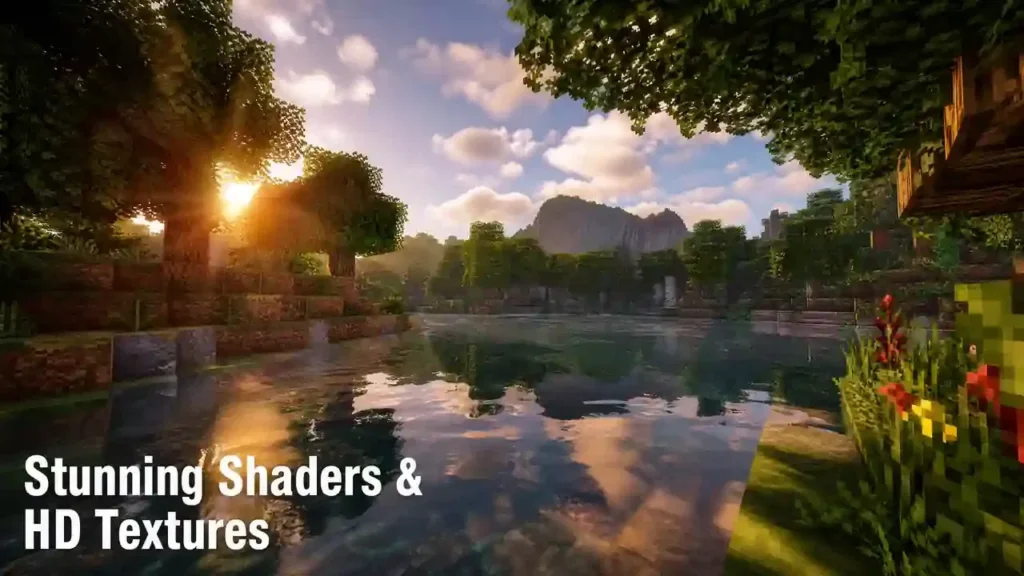
OptiFine also serves as the preferred platform for many popular shader packs. Players can install realistic lighting, dynamic shadows, reflections, waving vegetation, and improved water effects to transform Minecraft’s appearance. It also supports HD resource packs, allowing higher-resolution textures while maintaining smooth performance through optimized rendering. The mod works exclusively with Minecraft Java Edition. It does not support Minecraft Bedrock Edition, which uses a different game engine and rendering system.
OptiFine benefits nearly every type of Minecraft player, including:
- Players who want higher FPS and smoother gameplay.
- Users with low-end PCs looking to reduce lag.
- Builders who use HD resource packs.
- Content creators who want better graphics.
- Players who enjoy realistic shader packs.
- Survival and multiplayer players seeking stable performance.
Whether you play vanilla Minecraft or customize your game with visual enhancements, OptiFine provides a practical way to improve both performance and graphics without changing the core gameplay experience.
Featured Snippet:
Minecraft OptiFine 1.21.5 is a performance optimization mod for Minecraft Java Edition that improves FPS, adds advanced graphics settings, enables shader pack support, supports HD resource packs, and enhances visual quality without changing the game’s core mechanics. It helps players achieve smoother gameplay, better graphics, and greater control over Minecraft’s video settings.
What’s New in OptiFine 1.21.5?
OptiFine updates focus on keeping pace with Minecraft’s latest rendering changes while improving performance, stability, and visual quality. Because OptiFine development follows Minecraft updates, each release also includes compatibility work to support the newest game version.
New Rendering Improvements
OptiFine 1.21.5 refines Minecraft’s rendering pipeline to deliver smoother gameplay and more consistent frame rates. Rendering optimizations reduce unnecessary workload during world exploration, chunk loading, and scene updates. Players often notice smoother camera movement and fewer visual stutters, especially in large worlds.
Rendering improvements include:
- More efficient chunk rendering.
- Better texture loading.
- Improved lighting calculations.
- Smoother world rendering.
- Reduced rendering overhead.
Latest Performance Optimizations
Performance remains OptiFine’s primary focus. The latest optimizations help Minecraft use system resources more efficiently without changing gameplay.
Key improvements include:
- Better FPS stability.
- Faster chunk loading.
- Reduced lag spikes.
- Improved memory usage.
- More responsive video settings.
- Better performance with larger worlds.
These optimizations benefit both entry-level and high-end computers, although the exact FPS gain depends on your hardware, game settings, installed resource packs, and shader configuration.
Bug Fixes and Stability Improvements
Each OptiFine update also resolves issues discovered in earlier builds. Stability fixes help reduce crashes, graphical glitches, and compatibility problems.
Common improvements include:
- Fixed rendering inconsistencies.
- Improved launcher compatibility.
- Better shader loading.
- Resolved texture rendering issues.
- Enhanced game stability during long play sessions.
These fixes create a more reliable experience across different hardware and operating systems.
Better Shader Support
Shader compatibility continues to improve with every OptiFine release. Updates help shader packs work more reliably with Minecraft’s latest rendering system.
Players can expect improvements such as:
- Better shader loading.
- Improved lighting effects.
- More accurate shadows.
- Better water rendering.
- Improved sky and cloud effects.
- Fewer visual artifacts.
The exact shader compatibility depends on whether individual shader developers have updated their packs for Minecraft 1.21.5.
Improved HD Resource Pack Support
OptiFine continues to optimize high-resolution textures without sacrificing performance. Improvements help large resource packs load more efficiently while maintaining visual quality.
Benefits include:
- Better HD texture rendering.
- Improved connected textures.
- More consistent custom colors.
- Better custom font support.
- Improved texture memory management.
This allows players to enjoy detailed visuals with fewer performance issues.
Compatibility Updates
Each Minecraft OptiFine release includes compatibility work for the latest Minecraft Java Edition updates. These changes help maintain support for new game mechanics, rendering changes, and resource pack formats introduced by Mojang.
Compatibility improvements may include:
- Updated support for the latest Minecraft version.
- Improved Java compatibility.
- Better integration with modern resource packs.
- Continued support for OptiFine’s advanced graphics features.
Always check the official OptiFine changelog for the exact compatibility status of your Minecraft version before installing.
How It Compares to the Previous Release
Compared with the previous OptiFine version, OptiFine 1.21.5 primarily focuses on refinement rather than introducing entirely new features. The core improvements center on performance, stability, rendering efficiency, and compatibility with the latest Minecraft update.
If you already use an earlier OptiFine release, upgrading typically provides:
- Better overall stability.
- Improved rendering performance.
- Updated compatibility with Minecraft 1.21.5.
- Better shader and resource pack support.
- Additional bug fixes and optimization improvements.
For most players, the update delivers a smoother and more polished Minecraft experience while preserving the familiar OptiFine features they already use.
Note: The exact features, fixes, and compatibility details depend on the specific OptiFine build released for Minecraft 1.21.5. Verify the official changelog before citing version-specific changes or recommending an upgrade.
Why Millions of Players Use OptiFine
OptiFine has remained one of the most popular Minecraft mods for years because it solves problems that almost every player faces. Whether you want higher FPS, smoother gameplay, better graphics, or support for shaders, OptiFine improves the experience without changing Minecraft’s core mechanics. It works for casual players, builders, PvP enthusiasts, content creators, and players with both low-end and high-end PCs.
FPS Boost
One of OptiFine’s biggest advantages is its ability to improve frame rates. It optimizes how Minecraft renders the world, helping your computer use CPU and GPU resources more efficiently.
Players often experience:
- Higher average FPS.
- More stable frame rates.
- Fewer sudden FPS drops.
- Smoother gameplay during exploration.
- Better performance in large worlds.
The exact improvement depends on your hardware, graphics settings, render distance, and installed resource packs.
Better Graphics
OptiFine gives players complete control over Minecraft’s visual settings. It unlocks advanced options that are not available in the default game.
You can customize:
- Lighting quality.
- Shadows.
- Fog effects.
- Animations.
- Connected textures.
- Sky effects.
- Water appearance.
- Grass and snow rendering.
These settings let you improve image quality or maximize performance based on your preferences.
Less Lag
Minecraft can struggle when loading new terrain or rendering complex builds. OptiFine reduces unnecessary processing to create a smoother experience.
Benefits include:
- Fewer lag spikes.
- More responsive gameplay.
- Better world rendering.
- Improved game stability.
- Reduced stuttering during movement.
This makes long exploration sessions much more enjoyable.
Faster World Loading
Large Minecraft worlds can take time to load, especially with high-resolution resource packs. OptiFine improves how the game loads textures and chunks.
Players often notice:
- Faster startup times.
- Quicker world loading.
- Improved chunk generation.
- Reduced waiting between world loads.
The result is less downtime and more time playing.
Smoother Chunk Loading
Chunk loading affects how quickly new terrain appears as you explore. Slow chunk rendering can interrupt gameplay and make flying or traveling feel frustrating.
OptiFine helps by:
- Loading chunks more efficiently.
- Reducing visible chunk delays.
- Improving terrain rendering.
- Creating smoother exploration.
This improvement becomes especially noticeable when using Elytra, boats, or fast transportation methods.
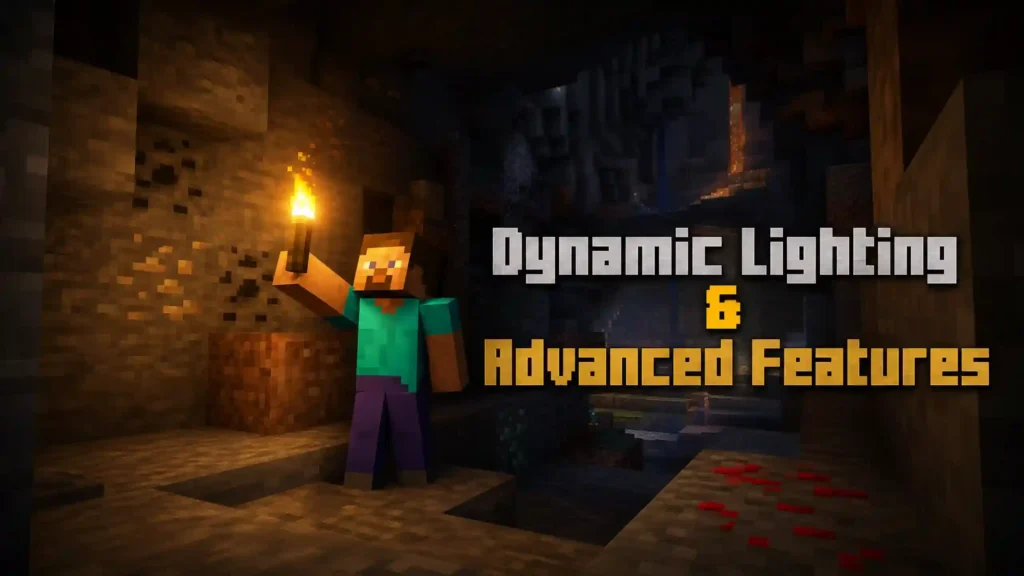
Dynamic Lighting
Dynamic Lighting allows certain light sources to illuminate the world while you hold or carry them. You no longer need to place every torch before seeing your surroundings.
Supported light sources include:
- Torches.
- Lanterns.
- Glowstone items.
- Other compatible light-emitting objects.
This feature makes mining, cave exploration, and nighttime travel more convenient.
Built-in Zoom
OptiFine includes a zoom feature that lets players view distant objects without installing another mod.
Players commonly use zoom to:
- Spot mobs.
- Locate structures.
- Scout villages.
- Aim more accurately.
- Inspect distant terrain.
It offers a simple quality-of-life improvement that many players use every day.
Better Overall Performance
OptiFine combines multiple optimizations into one package. Instead of improving only one part of Minecraft, it enhances the game’s overall performance.
Players benefit from:
- Better CPU efficiency.
- Improved GPU utilization.
- More stable gameplay.
- Smoother animations.
- Better compatibility with HD resource packs.
- Improved shader performance.
These improvements create a more consistent experience across different hardware configurations.
Real-World Use Cases
OptiFine helps different types of players in different ways.
Low-end PC players use OptiFine to increase FPS, reduce lag, and make Minecraft playable on older hardware.
Builders rely on HD resource packs, connected textures, and advanced graphics settings to create detailed worlds without sacrificing performance.
Shader enthusiasts use OptiFine to run popular shader packs with realistic lighting, shadows, reflections, and water effects.
PvP players lower visual effects and optimize settings to achieve higher FPS and smoother combat.
Survival players enjoy Dynamic Lighting, better chunk loading, and improved world performance during long exploration sessions.
Content creators and streamers use OptiFine to capture smoother gameplay while maintaining high visual quality for videos and live broadcasts.
These practical benefits explain why OptiFine remains one of the first mods many Minecraft Java Edition players install after setting up a new game.
Complete Feature Breakdown
OptiFine combines performance improvements with advanced graphics tools in a single mod. Instead of changing Minecraft’s gameplay, it enhances how the game looks, loads, and performs. Below is a detailed look at the features that make OptiFine one of the most popular optimization mods for Minecraft Java Edition.
FPS Optimization
FPS optimization is OptiFine’s core feature. It improves how Minecraft renders the world and manages system resources. This reduces unnecessary workload on your CPU and GPU, resulting in smoother gameplay and more consistent frame rates.
Key benefits include:
- Higher average FPS.
- Fewer frame drops.
- Better frame stability.
- Reduced input delay.
- Improved performance in large worlds.
Advanced Video Settings
OptiFine unlocks dozens of graphics options that the default game does not provide. These settings help you fine-tune performance and visual quality.
You can adjust:
- Render distance.
- Animation settings.
- Fog effects.
- Clouds.
- Lighting.
- Particle effects.
- Entity shadows.
- Quality settings.
This level of control lets you optimize Minecraft for almost any computer.
Dynamic Lighting
Dynamic Lighting allows light-emitting items to brighten your surroundings while you hold or drop them. You no longer need to place a torch every few blocks.
This feature improves:
- Cave exploration.
- Night travel.
- Mining.
- Adventure maps.
- Survival gameplay.
Connected Textures
Connected Textures remove visible borders between compatible blocks. Glass panes, bookshelves, sandstone, and many decorative blocks appear more natural and seamless.
This feature creates:
- Cleaner builds.
- Better architectural designs.
- More realistic environments.
- Improved HD resource pack support.
Better Grass
Better Grass extends grass textures to the sides of grass blocks. Hills, cliffs, and landscapes look smoother and more realistic.
Players enjoy:
- Cleaner terrain.
- Improved natural scenery.
- Better visual consistency.
Better Snow
Better Snow adds snow layers to blocks that normally appear uncovered. This creates more immersive snowy biomes and realistic winter landscapes.
It works especially well with:
- Mountains.
- Forests.
- Villages.
- Custom maps.
Smart Animations
Smart Animations improve performance by updating only the animations you can actually see. Hidden animations remain inactive until they appear on your screen.
This reduces:
- GPU workload.
- Memory usage.
- Unnecessary rendering.
It also helps increase FPS on lower-end systems.
Natural Textures
Natural Textures rotate selected block textures automatically. This reduces repeating patterns and gives the world a more organic appearance.
The result includes:
- More varied terrain.
- Better-looking forests.
- Improved stone surfaces.
- More realistic landscapes.
Random Entities
Random Entities display different textures for compatible mobs and objects. Resource packs can assign multiple appearances to the same entity, making the world feel more diverse.
You may notice:
- Villagers with unique outfits.
- Animals with varied textures.
- Different mob appearances.
Custom Sky
Custom Sky allows resource packs to replace Minecraft’s default sky with detailed alternatives.
These skies may include:
- High-resolution stars.
- Better clouds.
- Dynamic sunsets.
- Improved moon phases.
- Enhanced atmosphere.
HD Fonts
OptiFine supports high-definition fonts for compatible resource packs. Text appears sharper and easier to read, especially at higher resolutions.
This improves:
- Menus.
- Chat.
- Signs.
- User interface elements.
Custom Colors
Custom Colors let resource packs modify many in-game colors beyond the default palette.
Examples include:
- Water.
- Grass.
- Foliage.
- Sky.
- Fog.
- Potion effects.
This feature helps resource packs create unique visual styles.
Better Fog
OptiFine gives players greater control over fog effects. You can adjust fog quality, distance, and appearance to improve visibility or create a specific atmosphere.
This helps with:
- Exploration.
- Performance tuning.
- Visual customization.
Render Distance Optimization
Higher render distances can reduce performance on many systems. OptiFine optimizes chunk rendering so players can increase view distance more efficiently.
Benefits include:
- Better long-distance visibility.
- Smoother exploration.
- Reduced rendering overhead.
Mipmap Levels
Mipmap settings control how textures appear at different distances. Proper configuration reduces shimmering and improves image quality.
Players can balance:
- Texture sharpness.
- Performance.
- Visual clarity.
VBO Optimization
Vertex Buffer Objects (VBOs) improve rendering efficiency by storing graphics data directly on the GPU. OptiFine optimizes how Minecraft uses VBOs to reduce rendering overhead.
Advantages include:
- Better rendering speed.
- Improved FPS stability.
- Smoother graphics.
Entity Rendering
Entity rendering optimizations reduce the performance impact of mobs, animals, villagers, and other moving objects.
This helps maintain stable FPS in:
- Mob farms.
- Villages.
- Multiplayer servers.
- Large builds.
Chunk Loading
Chunk loading determines how quickly new terrain appears while you travel. OptiFine improves chunk processing to create a smoother exploration experience.
Players benefit from:
- Faster terrain loading.
- Fewer loading delays.
- Reduced world-generation stutter.
Zoom Feature
OptiFine includes a built-in zoom tool without requiring additional mods. Players can inspect distant terrain with a single key press.
Zoom is useful for:
- Finding structures.
- Spotting hostile mobs.
- Exploring mountains.
- PvP situations.
- Navigation.
Shader Support
OptiFine provides built-in support for many popular shader packs. Shaders add advanced visual effects that transform Minecraft’s appearance.
Common improvements include:
- Dynamic lighting.
- Realistic shadows.
- Water reflections.
- Volumetric clouds.
- Waving plants.
- Better ambient lighting.
Shader performance depends on your graphics card and the shader pack you choose.
HD Texture Support
OptiFine allows Minecraft to load high-resolution resource packs efficiently. It supports textures far beyond the game’s default resolution while maintaining better performance.
Supported resolutions commonly include:
- 32×32
- 64×64
- 128×128
- 256×256
- 512×512 and higher
This feature gives players more detailed environments without sacrificing stability.
Resource Pack Improvements
OptiFine expands Minecraft’s resource pack capabilities beyond the vanilla game. It enables advanced customization features that many creators rely on.
These improvements include:
- Connected textures.
- Custom colors.
- Random entity textures.
- Better lighting effects.
- HD fonts.
- Enhanced sky rendering.
- Improved texture loading.
Together, these features allow resource packs to deliver richer visuals while keeping gameplay smooth and responsive. For players who want better performance, sharper graphics, or full shader compatibility, OptiFine remains one of the most complete visual enhancement mods available for Minecraft Java Edition.
Complete Feature Breakdown
OptiFine offers far more than an FPS boost. It improves nearly every part of Minecraft’s graphics engine while giving players full control over visual settings. Whether you play vanilla Minecraft or use shaders and HD resource packs, these features help create a smoother, sharper, and more customizable experience.
FPS Optimization
FPS Optimization is the foundation of OptiFine. It improves how Minecraft renders the world and uses your hardware more efficiently. This reduces unnecessary processing and delivers smoother gameplay.
Key benefits include:
- Higher average FPS.
- More stable frame rates.
- Fewer lag spikes.
- Lower GPU workload.
- Better CPU utilization.
- Improved gameplay on low-end PCs.
Players often notice the biggest improvements in large worlds, multiplayer servers, and heavily populated areas.
Advanced Video Settings
OptiFine expands Minecraft’s default graphics menu with dozens of advanced options. These settings let you fine-tune visual quality and performance for your hardware.
You can customize:
- Graphics quality.
- Render distance.
- Simulation distance.
- Animations.
- Clouds.
- Fog.
- Particles.
- Lighting.
- Performance settings.
- Quality settings.
- Details settings.
This flexibility helps players find the perfect balance between image quality and FPS.
Dynamic Lighting
Dynamic Lighting allows light-emitting items to illuminate nearby blocks while you hold, wear, or drop them. This removes the need to place torches constantly during exploration.
Supported light sources include:
- Torches.
- Lanterns.
- Glowstone.
- Sea Lanterns.
- Jack o’Lanterns.
- Blaze Rods.
This feature makes mining, cave exploration, and nighttime adventures safer and more convenient.
Connected Textures
Connected Textures, also known as CTM (Connected Texture Mapping), remove visible seams between compatible blocks. Instead of repeating the same texture on every block, OptiFine blends textures together for a cleaner appearance.
Common examples include:
- Glass.
- Glass panes.
- Bookshelves.
- Sandstone.
- Bricks.
Builders benefit the most from this feature because structures look more polished and realistic.
Better Grass
Better Grass extends grass textures to the sides of grass blocks instead of leaving dirt exposed. Landscapes appear smoother and more natural without changing gameplay.
Benefits include:
- Cleaner hillsides.
- More realistic terrain.
- Better-looking gardens.
- Improved outdoor builds.
Better Snow
Better Snow places snow layers on compatible blocks that normally remain uncovered. Winter biomes become more immersive and visually consistent.
This feature improves:
- Snowy forests.
- Frozen mountains.
- Villages.
- Survival worlds.
Smart Animations
Smart Animations boost performance by animating only textures that appear on your screen. Hidden animations stop updating until they become visible again.
This optimization reduces:
- GPU usage.
- Memory consumption.
- Rendering overhead.
Players using lower-end hardware often notice smoother gameplay.
Natural Textures
Natural Textures randomly rotate selected block textures to reduce repetitive patterns. Stone, grass, sand, and wood appear more varied without requiring additional resource packs.
This creates:
- More organic landscapes.
- Better terrain variety.
- Improved visual realism.
Random Entities
Random Entities allow compatible resource packs to display multiple textures for the same mob or object. Instead of every animal looking identical, each one can have a unique appearance.
Examples include:
- Cows.
- Sheep.
- Villagers.
- Zombies.
- Horses.
This feature adds visual diversity without affecting gameplay.
Custom Sky
Custom Sky replaces Minecraft’s default sky with high-quality alternatives included in supported resource packs.
Enhancements may include:
- Realistic stars.
- High-resolution moons.
- Dynamic sunrises.
- Improved sunsets.
- Custom cloud effects.
The result is a more immersive environment throughout the day and night cycle.
HD Fonts
OptiFine supports high-definition fonts included in resource packs. Text appears sharper and easier to read, especially on high-resolution displays.
HD Fonts improve:
- Menus.
- Chat.
- Signs.
- User interface text.
Custom Colors
Custom Colors allow resource packs to redefine many of Minecraft’s default colors. This creates unique visual themes without modifying gameplay.
Supported elements include:
- Water.
- Grass.
- Leaves.
- Sky.
- Fog.
- Potions.
- Experience orbs.
This feature helps artists build visually distinctive worlds.
Better Fog
Better Fog gives players greater control over fog rendering. You can adjust fog quality, distance, and appearance to improve visibility or create a specific atmosphere.
This feature helps:
- Increase visibility.
- Improve performance.
- Customize visual style.
Render Distance Optimization
Increasing render distance usually lowers FPS. OptiFine optimizes chunk rendering to reduce the performance impact of viewing more terrain.
Benefits include:
- Longer viewing distances.
- Faster terrain rendering.
- Smoother exploration.
- Better flight experience with Elytra.
Mipmap Levels
Mipmap Levels improve how textures appear at different distances. Proper settings reduce flickering and create smoother transitions between nearby and distant blocks.
Advantages include:
- Sharper textures.
- Less shimmering.
- Improved visual quality.
- Better texture filtering.
Players can adjust mipmap levels to match their graphics hardware.
VBO Optimization
Vertex Buffer Objects (VBOs) store rendering data directly on the graphics card instead of repeatedly sending it from the CPU. OptiFine optimizes this process to improve rendering efficiency.
Benefits include:
- Faster rendering.
- Better FPS stability.
- Lower CPU usage.
- Improved GPU performance.
Entity Rendering
Entity Rendering controls how Minecraft processes mobs, animals, villagers, armor stands, and other moving objects. OptiFine optimizes this system to reduce performance drops in crowded areas.
This improves gameplay in:
- Mob farms.
- Villages.
- Multiplayer servers.
- Large survival bases.
Chunk Loading
Chunks generate continuously as you explore the world. Slow chunk loading can interrupt movement and reduce immersion. OptiFine improves how chunks load and render.
Players benefit from:
- Faster terrain generation.
- Reduced loading delays.
- Smoother exploration.
- Better long-distance travel.
This improvement becomes especially noticeable while flying with Elytra or using high-speed transportation.
Zoom Feature
OptiFine includes a built-in zoom function that removes the need for separate zoom mods. Players can quickly inspect distant objects with a dedicated key.
Zoom proves useful for:
- Finding villages.
- Locating structures.
- Spotting hostile mobs.
- PvP combat.
- Exploring mountain ranges.
It offers a simple but valuable quality-of-life improvement.
Shader Support
Shader support remains one of OptiFine’s most popular features. It allows players to install compatible shader packs that dramatically improve Minecraft’s visuals.
Popular shader effects include:
- Dynamic shadows.
- Global illumination.
- Realistic water.
- Screen-space reflections.
- Volumetric clouds.
- Waving vegetation.
- Ambient lighting.
Shader performance depends on your graphics card and the complexity of the shader pack.
HD Texture Support
OptiFine supports high-resolution resource packs while optimizing texture loading and memory usage. Players can enjoy detailed textures without sacrificing as much performance as the vanilla game.
Common supported resolutions include:
- 32×32
- 64×64
- 128×128
- 256×256
- 512×512
- 1024×1024
Higher resolutions require more RAM and a stronger GPU.
Resource Pack Improvements
OptiFine expands what creators can achieve with resource packs. It introduces advanced rendering features that go beyond vanilla Minecraft.
These improvements include:
- Connected textures.
- Random entity textures.
- Custom colors.
- Custom skies.
- HD fonts.
- Better lighting support.
- Improved texture rendering.
- Faster resource loading.
Together, these enhancements give players more visual freedom while maintaining smooth performance. Whether you want maximum FPS or stunning graphics, OptiFine provides one of the most complete optimization and customization toolsets available for Minecraft Java Edition.
OptiFine 1.21.5 Version Information
OptiFine development closely follows Minecraft Java Edition updates. Each new Minecraft version requires OptiFine to adapt to rendering changes, resource pack formats, and game engine updates. As a result, OptiFine releases often progress through preview builds before reaching a stable version.
Important: Always verify the latest build status on the official OptiFine website before downloading. Development stages can change as new Minecraft updates are released.
Current Release
The current OptiFine 1.21.5 build represents the latest version available for Minecraft Java Edition. Each release focuses on compatibility, performance, and stability instead of introducing new gameplay mechanics.
A typical release includes:
- Support for Minecraft 1.21.5.
- Performance optimizations.
- Rendering improvements.
- Bug fixes.
- Shader compatibility updates.
- Resource pack support.
If a newer build becomes available, upgrading ensures you receive the latest fixes and compatibility improvements.
Preview Versions
Before a stable release, OptiFine developers often publish preview versions. These builds allow players to test new features and identify bugs.
Preview releases usually include:
- Early Minecraft version support.
- Experimental rendering changes.
- Initial shader compatibility.
- Community bug testing.
- Ongoing optimization work.
Preview builds work well for experienced users but may contain unresolved issues.
Stable Version
A stable version completes extensive testing and resolves the most common problems found in preview builds. Most players should choose the stable release because it offers the best balance of performance, reliability, and compatibility.
A stable build typically provides:
- Better game stability.
- Improved shader support.
- Fewer crashes.
- Better resource pack compatibility.
- More consistent FPS.
If you play survival worlds or multiplayer servers, the stable release remains the safest option.
Changelog
Every OptiFine release includes a changelog that documents improvements and fixes. Reading the changelog helps you understand what changed before updating.
Common entries include:
- Performance optimizations.
- Rendering improvements.
- Fixed bugs.
- Updated Minecraft compatibility.
- Shader fixes.
- Resource pack improvements.
- Stability enhancements.
Reviewing the changelog also helps troubleshoot issues after upgrading.
Update History
OptiFine has evolved alongside Minecraft for many years. Each major Minecraft update introduces rendering changes that require OptiFine to update its optimization engine.
The development process generally follows this pattern:
- Minecraft releases a new version.
- OptiFine begins compatibility development.
- Preview builds become available.
- Bugs receive community testing.
- Stable release becomes available.
- Additional maintenance updates fix newly discovered issues.
This update cycle helps keep OptiFine compatible with the latest Minecraft Java Edition while preserving its core performance and graphics features.
System Requirements
OptiFine runs on the same hardware that supports Minecraft Java Edition. However, your system specifications determine how much performance you gain and whether you can run demanding shader packs or HD resource packs. Meeting the minimum requirements lets you install OptiFine, while the recommended specifications deliver a smoother experience with advanced graphics features enabled.
Minimum System Requirements
| Component | Minimum Requirement |
|---|---|
| CPU | Dual-core processor (Intel Core i3 or AMD equivalent) |
| RAM | 4 GB system memory |
| GPU | Graphics card with OpenGL support |
| Java Version | Compatible Java version required by Minecraft 1.21.5 |
| Storage | At least 500 MB of free space |
| Operating System | Windows, macOS, or Linux |
These specifications work well for vanilla gameplay with moderate graphics settings.
Recommended System Requirements
| Component | Recommended Specification |
|---|---|
| CPU | Quad-core Intel Core i5/Ryzen 5 or better |
| RAM | 8 GB or more |
| GPU | Dedicated NVIDIA GeForce, AMD Radeon, or Intel Arc graphics |
| Java Version | Latest supported 64-bit Java version for Minecraft 1.21.5 |
| Storage | SSD with at least 1 GB of available space |
| Operating System | Latest version of Windows, macOS, or Linux |
These specifications provide smoother gameplay, faster chunk loading, and better shader performance.
CPU Requirements
Minecraft depends heavily on processor performance. A modern multi-core CPU improves world generation, chunk loading, and overall game responsiveness.
For the best experience:
- Use a recent Intel Core or AMD Ryzen processor.
- Close unnecessary background applications.
- Keep your processor drivers and firmware updated.
RAM Requirements
Minecraft and OptiFine both benefit from sufficient memory. More RAM allows larger worlds, better multitasking, and smoother gameplay with resource packs.
General recommendations:
- 4 GB for basic gameplay.
- 8 GB for most players.
- 16 GB or more for shaders, HD resource packs, and heavy modpacks.
Avoid allocating excessive RAM to Minecraft, as this can reduce performance instead of improving it.
GPU Requirements
Your graphics card determines how well Minecraft handles advanced visual effects.
A dedicated GPU provides better performance for:
- Shader packs.
- High render distances.
- HD resource packs.
- Advanced lighting.
- High-resolution textures.
Integrated graphics can still run OptiFine, but lowering graphics settings often improves FPS.
Java Version
OptiFine requires the same Java version supported by the corresponding Minecraft release. Using the correct 64-bit Java installation improves stability and prevents launch errors.
For best results:
- Install the Java version required by Minecraft 1.21.5.
- Use a 64-bit installation.
- Keep Java updated through official sources.
Storage Requirements
OptiFine itself occupies very little disk space. However, shader packs, HD resource packs, screenshots, and saved worlds can quickly increase storage usage.
An SSD offers noticeable benefits, including:
- Faster game startup.
- Shorter world loading times.
- Quicker resource pack loading.
- Better overall responsiveness.
Supported Operating Systems
OptiFine supports the same desktop platforms as Minecraft Java Edition.
Windows
Windows provides the widest compatibility with OptiFine, shader packs, and graphics drivers. Most players use Windows because it offers excellent support for NVIDIA, AMD, and Intel GPUs.
macOS
OptiFine works on macOS with Minecraft Java Edition. Performance depends on your Mac model, Apple Silicon or Intel processor, available memory, and graphics hardware.
Linux
Linux users can install OptiFine with Minecraft Java Edition using the standard Java launcher or compatible launchers. Performance varies depending on your graphics drivers and desktop environment, but OptiFine supports Linux as a desktop platform.7. Is OptiFine 1.21.5 Safe? Yes, OptiFine 1.21.5 is generally safe when you download it from the official OptiFine website and follow standard security practices. Millions of Minecraft Java Edition players have used OptiFine for years to improve performance, enable shader support, and customize graphics. Most security problems come from unofficial websites that distribute modified installers or fake downloads.
Download Only from the Official Source
The safest way to install OptiFine is to download it from the official OptiFine website. Official releases receive updates from the OptiFine development team and support the latest Minecraft Java Edition versions.
Avoid downloading OptiFine from:
- Unknown file-sharing websites.
- Unverified mod repositories.
- Random YouTube download links.
- Suspicious advertisements.
- Websites offering modified installers.
Using the official source greatly reduces the risk of downloading unwanted software.
Does OptiFine Contain Viruses?
The official OptiFine installer does not contain malware or viruses. However, antivirus software may occasionally flag the installer because it is a Java executable (.jar) rather than a traditional Windows application. In most cases, these detections are false positives, not evidence of malicious software.
If your antivirus displays a warning:
- Verify the download source.
- Confirm you downloaded the original installer.
- Check the file extension.
- Avoid disabling your antivirus unless you understand the warning.
Never ignore genuine security alerts from unknown downloads.
Beware of Fake Installers
Fake OptiFine installers remain one of the biggest security risks for Minecraft players. Cybercriminals often create websites that imitate the official OptiFine download page to distribute unwanted software or steal personal information.
Warning signs include:
- Requests to install extra software.
- Multiple download buttons.
- Password-protected ZIP files.
- Executable (.exe) installers instead of the official Java installer.
- Pop-up advertisements claiming your PC is infected.
If something looks suspicious, leave the website immediately.
Security Tips Before Installing
Follow these best practices to protect your computer.
- Download only from the official OptiFine website.
- Keep Minecraft and Java updated.
- Use trusted antivirus software.
- Scan downloaded files if you have concerns.
- Avoid modified OptiFine builds.
- Do not install bundled software.
- Keep your operating system updated.
These simple steps help reduce security risks.
How to Verify Your Download
Before opening the installer, confirm that you downloaded the correct file.
Check the following:
- The file comes from the official OptiFine website.
- The installer matches the Minecraft version you want.
- The file uses the .jar extension.
- The download completed without errors.
- The file size appears reasonable for an OptiFine installer.
If any detail looks unusual, delete the file and download it again from the official source.
Community Reputation
OptiFine has earned a strong reputation within the Minecraft Java Edition community. For many years, players have relied on it to improve FPS, support HD resource packs, and run shader packs.
Its popularity comes from:
- Long development history.
- Regular updates.
- Millions of downloads.
- Broad community support.
- Compatibility with many resource packs and shaders.
While no software is completely risk-free, downloading OptiFine from the official website remains the safest approach.
How to Download Minecraft OptiFine 1.21.5
Downloading OptiFine only takes a few minutes when you use the correct source. Before you begin, make sure your Minecraft version matches the OptiFine version you plan to install.
Where to Download OptiFine 1.21.5
Always download OptiFine from the official OptiFine website. The official download page lists every supported Minecraft version, preview build, and stable release. Avoid websites that promise faster downloads or modified versions. They often distribute outdated files or unwanted software.
Download the Latest Version
Choose the newest stable release whenever possible. Stable builds receive the most testing and usually offer the best performance and compatibility. If a stable release is unavailable, you may see a preview version. Preview builds help test compatibility with the latest Minecraft update but may still contain unresolved issues.
Before downloading, verify:
- Minecraft version.
- Release status.
- Build number.
- Release date.
This helps you install the correct version the first time.
Using the Mirror Download
The OptiFine website also provides a Mirror download option.
The Mirror serves as an alternative download source if:
- The main download page loads slowly.
- Advertisements fail to display correctly.
- Your browser blocks the primary download.
Both download methods provide the same official OptiFine installer.
Download the Installer
Most players should download the standard OptiFine installer. The installer automatically creates an OptiFine profile for Minecraft Launcher.
Before running the installer:
- Install Minecraft Java Edition.
- Launch the game once.
- Close Minecraft completely.
- Install the correct Java version if needed.
These steps help prevent installation errors.
Download the JAR File
OptiFine downloads as a Java Archive (.jar) file. This file contains the installer and the OptiFine program.
To open the installer successfully:
- Ensure Java is installed.
- Associate
.jarfiles with Java if necessary. - Avoid renaming the file.
- Keep it in an easy-to-find folder, such as Downloads.
If the file does not open, the problem usually relates to your Java installation rather than OptiFine itself.
Verify the Official Source
Before opening any installer, verify that:
- You are on the official OptiFine website.
- The Minecraft version matches 1.21.5.
- The file name matches the selected release.
- The installer uses the .jar format.
- The download completed successfully.
A quick verification can prevent installation problems later.
Common Download Mistakes
Many installation problems begin during the download process. Avoid these common mistakes:
- Downloading the wrong Minecraft version.
- Using unofficial websites.
- Choosing outdated preview builds without checking compatibility.
- Opening the installer without Java installed.
- Downloading duplicate installers.
- Running modified OptiFine files from unknown sources.
- Deleting the installer before completing installation.
Taking a few moments to verify your download helps ensure a smooth installation and reduces the risk of compatibility or security issues.
How to Install OptiFine 1.21.5
Installing Minecraft OptiFine 1.21.5 is simple when you follow the correct steps. Before you begin, make sure you have launched Minecraft Java Edition at least once. This creates the required game files and folders. You’ll also need the correct Java version for Minecraft 1.21.5 and the official OptiFine installer.
How to Install OptiFine 1.21.5 on Windows
Windows offers the easiest installation process because the OptiFine installer works directly with Minecraft Launcher.
Follow these steps:
- Download the OptiFine 1.21.5 installer from the official OptiFine website.
- Install the correct Java version if it is not already installed.
- Locate the downloaded OptiFine_1.21.5_HD_U_*.jar file.
- Double-click the JAR file to open the installer.
- If the installer does not open, launch it with Java Platform SE Binary.
- Click Install.
- Wait for the installation to finish.
- Open Minecraft Launcher.
- Select the OptiFine profile.
- Click Play.
The game will now launch with OptiFine enabled.
How to Install OptiFine 1.21.5 on macOS
OptiFine also supports macOS with Minecraft Java Edition.
Installation steps:
- Download the official OptiFine installer.
- Install the required Java version if needed.
- Open the Downloads folder.
- Double-click the OptiFine JAR file.
- If macOS asks for permission, allow Java to run.
- Click Install.
- Wait until the installation completes.
- Launch Minecraft Launcher.
- Choose the OptiFine profile.
- Start the game.
If the installer does not open, verify that Java is installed correctly and associated with JAR files.
How to Install OptiFine 1.21.5 on Linux
Linux users can install OptiFine using Java from the terminal or desktop environment.
Follow these steps:
- Download the official OptiFine installer.
- Install the required Java runtime.
- Open the folder containing the installer.
- Run the installer using Java.
- Click Install.
- Wait for the process to finish.
- Open Minecraft Launcher.
- Select the OptiFine profile.
- Launch Minecraft.
Most Linux distributions support OptiFine as long as Java and Minecraft Java Edition work correctly.
How to Install OptiFine with Minecraft Launcher
Minecraft Launcher automatically detects the OptiFine profile after installation. This makes it the recommended method for most players.
Step 1: Install Minecraft Java Edition
Open Minecraft Launcher and launch the version that matches your OptiFine installer at least once.
For example:
- Minecraft 1.21.5 → Launch once.
- Close the game completely.
This creates the required version files.
Step 2: Download the Correct OptiFine Version
Download the OptiFine build that matches your Minecraft version. Using a different version may prevent the game from launching.
Step 3: Run the Installer
Open the downloaded JAR file. The installer automatically detects your Minecraft installation folder. Click Install. After a few seconds, you should see a confirmation message.
Step 4: Open Minecraft Launcher
Start Minecraft Launcher again. Click the version selector beside the Play button. You should now see an OptiFine installation profile.
Step 5: Select the OptiFine Profile
Choose the OptiFine profile from the list.
If it does not appear:
- Restart the launcher.
- Verify the installation completed successfully.
- Make sure you installed the correct Minecraft version.
Step 6: Launch Minecraft
Click Play.
After the main menu loads:
- Open Options.
- Select Video Settings.
If you see OptiFine’s expanded graphics menu, the installation succeeded.
You can now:
- Increase FPS.
- Install shader packs.
- Use HD resource packs.
- Customize advanced graphics settings.
How to Install OptiFine with Forge
Many players use Minecraft Forge to run multiple mods alongside OptiFine. Whether this works depends on the OptiFine version and Forge version you install. Before combining them, always verify compatibility for your specific Minecraft release.
Compatibility
OptiFine and Forge can work together when compatible builds are available. In supported versions, OptiFine functions like a normal mod while providing its graphics and performance features.
Successful compatibility depends on:
- Matching Minecraft versions.
- A compatible Forge release.
- The correct OptiFine build.
- Updated Java installation.
Always check the official OptiFine changelog and Forge documentation before installing both together, as compatibility can change between Minecraft releases.
Installation Steps
If your OptiFine version supports Forge:
- Install Minecraft Forge for the same Minecraft version.
- Launch Forge once and close the game.
- Download the official OptiFine installer.
- Open the installer.
- Extract or install the OptiFine mod file if the build provides Forge support.
- Place the OptiFine JAR file into the mods folder.
- Launch Minecraft using the Forge profile.
- Verify that OptiFine appears in the installed mods list.
If OptiFine does not load, check that every component targets the same Minecraft version.
Limitations
Not every OptiFine release supports Forge immediately after a new Minecraft update. Development priorities often focus on standalone OptiFine first, while Forge compatibility may arrive later.
You may encounter:
- Version incompatibility.
- Mod conflicts.
- Shader issues.
- Startup crashes.
- Missing OptiFine features.
- Rendering glitches caused by other mods.
Installing incompatible versions is one of the most common causes of launch errors.
Best Practices
Follow these recommendations for a stable installation:
- Match the Minecraft version across OptiFine and Forge.
- Download both tools from their official websites.
- Keep Java updated.
- Test OptiFine before adding other mods.
- Add mods one at a time to identify conflicts.
- Back up your worlds before installing new mods.
- Review the latest compatibility notes before updating.
If your primary goal is higher FPS with minimal mods, running OptiFine through the standard Minecraft Launcher is often the simplest and most reliable option. If you plan to build a larger modpack, confirm Forge compatibility first to avoid unnecessary troubleshooting.
Fabric Compatibility
Many players ask whether OptiFine 1.21.5 works with Fabric. The answer depends on the OptiFine build and the current Minecraft Optifine version. Fabric and OptiFine use different approaches to improve Minecraft, so compatibility is not always guaranteed. If you already use Fabric mods, you should check the latest compatibility status before installing OptiFine.
Can OptiFine Work with Fabric?
OptiFine is designed as a standalone optimization mod. Fabric uses its own lightweight mod loader and ecosystem. Because of this difference, OptiFine does not always integrate directly with Fabric. In some Minecraft versions, community compatibility mods allow OptiFine to work with Fabric. In other versions, no reliable solution exists.
Before installing both together:
- Verify OptiFine supports your Minecraft version.
- Check whether a Fabric compatibility solution exists.
- Read the latest compatibility notes.
- Test the setup in a separate Minecraft profile.
If compatibility is unavailable, consider using Fabric-native performance mods instead.
Best Alternatives to OptiFine
The Fabric ecosystem offers several high-performance alternatives. Many players choose these mods because they integrate naturally with Fabric and receive frequent updates.
Iris Shaders
Iris Shaders focuses on shader support. It delivers excellent compatibility with modern shader packs while working alongside Fabric.
Key features include:
- High shader compatibility.
- Excellent performance.
- Active development.
- Smooth integration with Sodium.
- Support for popular shader packs.
Iris is an excellent choice if your main goal is realistic graphics.
Sodium
Sodium is one of the most popular performance mods for Minecraft Java Edition. It replaces large parts of Minecraft’s rendering engine to improve FPS and reduce lag.
Benefits include:
- Significant FPS improvements.
- Faster chunk rendering.
- Better memory efficiency.
- Reduced CPU usage.
- Excellent Fabric integration.
Unlike OptiFine, Sodium focuses entirely on performance rather than visual customization.
When Should You Choose Each?
The right choice depends on how you play Minecraft.
Choose OptiFine if you want:
- Advanced video settings.
- Built-in zoom.
- Dynamic Lighting.
- Connected Textures.
- HD resource pack features.
- An all-in-one optimization solution.
Choose Sodium if you want:
- Maximum FPS.
- Faster rendering.
- Better Fabric compatibility.
- A lightweight performance mod.
Choose Iris if you want:
- Modern shader support.
- High-quality lighting.
- Better shader performance.
- Compatibility with Sodium.
Many Fabric players combine Sodium and Iris to achieve performance comparable to OptiFine while maintaining full compatibility with the Fabric mod ecosystem. If you prefer a standalone solution with advanced graphics features, OptiFine remains an excellent choice when it supports your Minecraft version.
How to Install Shader Packs
One of OptiFine’s most popular features is its built-in shader support. Shader packs transform Minecraft with realistic lighting, dynamic shadows, improved water, waving vegetation, and atmospheric skies. Installing shaders only takes a few minutes when you follow the correct steps.
Step 1: Install OptiFine
Before installing shaders, make sure OptiFine works correctly.
Launch Minecraft with the OptiFine profile.
Open Options → Video Settings.
If you see a Shaders button, OptiFine installed successfully.
Step 2: Download a Shader Pack
Choose a shader pack that supports your Minecraft version.
Popular options include:
- BSL Shaders.
- Complementary Shaders.
- Sildur’s Vibrant Shaders.
- SEUS.
- Chocapic13.
- ProjectLUMA.
Download the shader pack from its official website or a trusted source.
Step 3: Locate the Shaderpacks Folder
Minecraft stores shader packs inside the shaderpacks folder.
You can access it in two ways:
Method 1
Open Minecraft.
Go to:
Options → Video Settings → Shaders → Shader Packs Folder
Minecraft opens the correct folder automatically.
Method 2
Open your Minecraft installation directory.
Locate the shaderpacks folder.
If the folder does not exist, create a new folder named:
shaderpacks
Step 4: Add the Shader Pack
Move the downloaded shader file into the shaderpacks folder.
Do not extract the ZIP file unless the shader developer specifically instructs you to do so.
Minecraft reads most shader packs directly from the ZIP archive.
Step 5: Activate the Shader
Launch Minecraft with the OptiFine profile.
Go to:
Options → Video Settings → Shaders
Select your installed shader pack.
Minecraft reloads the world and applies the new graphics.
The first load may take a few moments.
Step 6: Optimize Shader Settings
Shader packs place additional demand on your GPU. Adjusting a few settings can improve performance without sacrificing visual quality.
For smoother gameplay:
- Lower Render Distance.
- Reduce Shadow Quality.
- Disable Motion Blur if available.
- Lower Reflection Quality.
- Use Medium Lighting instead of Ultra.
- Reduce Anti-Aliasing.
- Allocate enough RAM to Minecraft.
- Update your graphics drivers.
These changes often improve FPS while preserving excellent visuals.
Troubleshooting Shader Problems
If your shader pack does not work correctly, check these common issues:
- Install the correct OptiFine version.
- Verify shader compatibility with Minecraft 1.21.5.
- Update your graphics drivers.
- Use the latest Java version supported by Minecraft.
- Remove conflicting mods.
- Restart Minecraft after installing new shaders.
Most shader issues result from version mismatches rather than faulty installations. Once installed correctly, shader packs can completely transform Minecraft’s appearance. Combined with OptiFine’s performance optimizations, they deliver realistic lighting, detailed shadows, improved water effects, and a far more immersive gameplay experience.
Best Shader Packs for OptiFine 1.21.5
Shader packs can completely transform Minecraft’s visuals. They add realistic lighting, dynamic shadows, reflections, animated water, and atmospheric skies. The best shader for you depends on your hardware and the visual style you prefer. Always download shader packs from their official pages or trusted community sources, and verify they support your Minecraft version.
BSL Shaders
BSL Shaders is one of the most popular choices for Minecraft Java Edition. It balances visual quality with solid performance, making it suitable for many mid-range and high-end PCs.
Best for:
- Survival gameplay
- Beautiful landscapes
- Daily gameplay
- Screenshots
Key features:
- Realistic lighting
- Soft shadows
- Animated water
- Volumetric clouds
- Bloom effects
- Color customization
Complementary Shaders
Complementary Shaders builds on the vanilla Minecraft style while adding modern visual effects. It offers excellent customization and works well across different hardware.
Best for:
- Vanilla-style visuals
- Multiplayer
- Long survival worlds
- Balanced performance
Key features:
- Dynamic lighting
- Realistic skies
- Improved water
- Waving plants
- Custom lighting profiles
- High compatibility
SEUS (Sonic Ether’s Unbelievable Shaders)
SEUS remains one of the most recognizable shader packs in the Minecraft community. It focuses on realistic lighting and cinematic visuals.
Best for:
- High-end gaming PCs
- Cinematic videos
- Content creation
- Realistic gameplay
Key features:
- Global illumination
- Advanced reflections
- High-quality shadows
- Volumetric lighting
- Realistic water
- Physically inspired lighting
SEUS performs best on dedicated graphics cards.
Sildur’s Vibrant Shaders
Sildur’s Vibrant Shaders offers multiple quality presets, making it one of the most flexible shader packs available.
Best for:
- Low-end PCs
- Mid-range systems
- High-end gaming
- Beginners
Key features:
- Multiple performance presets
- Bright lighting
- Animated foliage
- Dynamic shadows
- Water reflections
- Strong FPS optimization
Players can select Lite, Medium, High, High MotionBlur, or Extreme editions based on their hardware.
Chocapic13 Shaders
Chocapic13 focuses on performance while still delivering realistic lighting and shadows. It remains a favorite for players who want attractive graphics without a major FPS loss.
Best for:
- Mid-range computers
- Performance-focused players
- Survival worlds
Key features:
- Lightweight rendering
- Dynamic shadows
- Improved lighting
- Water effects
- Multiple quality levels
ProjectLUMA
ProjectLUMA delivers high-quality visuals with optimized performance. It produces vibrant colors and clean lighting without overwhelming modern hardware.
Best for:
- Adventure maps
- Builders
- High-resolution resource packs
Key features:
- Detailed shadows
- Vibrant colors
- Clear reflections
- Atmospheric lighting
- Optimized rendering
Nostalgia Shaders
Nostalgia Shaders recreates Minecraft’s classic appearance while adding subtle modern improvements. It keeps the familiar vanilla atmosphere without dramatic visual changes.
Best for:
- Classic Minecraft fans
- Vanilla gameplay
- Long survival sessions
Key features:
- Soft lighting
- Improved sky colors
- Gentle shadows
- Classic atmosphere
- Lightweight performance
MakeUp Ultra Fast Shaders
MakeUp Ultra Fast targets players with older or entry-level hardware. It improves Minecraft’s visuals while maintaining excellent performance.
Best for:
- Low-end PCs
- Laptops
- Integrated graphics
- Maximum FPS
Key features:
- Lightweight rendering
- Fast performance
- Better lighting
- Improved water
- Minimal FPS impact
Which Shader Pack Should You Choose?
| Shader Pack | Best For | Performance |
|---|---|---|
| BSL | Balanced visuals | Medium |
| Complementary | Vanilla-style graphics | Medium |
| SEUS | Realistic graphics | High hardware required |
| Sildur’s Vibrant | All hardware levels | Excellent |
| Chocapic13 | Better FPS | Good |
| ProjectLUMA | High-quality visuals | Medium-High |
| Nostalgia | Classic Minecraft | Good |
| MakeUp Ultra Fast | Low-end PCs | Excellent |
Best Resource Packs for OptiFine 1.21.5
Resource packs change Minecraft’s textures, user interface, sounds, and visual details. OptiFine enhances many of these packs by supporting HD textures, Connected Textures (CTM), Custom Colors, Random Entities, and HD Fonts. Choosing the right pack depends on your PC’s performance and the look you want to achieve.
Best HD Resource Packs
HD resource packs improve texture quality while preserving Minecraft’s block-based style.
Faithful
Faithful keeps the original Minecraft look while increasing texture resolution.
Best for:
- Vanilla players
- Long-term survival worlds
- Better texture clarity
Clarity
Clarity offers detailed textures without making Minecraft look unrealistic.
Highlights:
- Clean block designs
- Sharp textures
- Excellent OptiFine support
- Smooth performance
SapixCraft
SapixCraft features colorful textures and supports multiple resolutions.
Available resolutions:
- 32x
- 64x
- 128x
- 256x
- 512x
It works well with shaders for vibrant gameplay.
Best PvP Resource Packs
PvP resource packs prioritize visibility and performance over realism.
Tightfault Revamp
Popular among competitive players.
Benefits:
- Clear weapon textures
- Lightweight design
- Better combat visibility
- Smooth FPS
TimeDeo 2K
A favorite for Bed Wars and SkyWars.
Features:
- Simplified textures
- Bright color palette
- Fast performance
Dynamic Duo
Designed for fast-paced PvP gameplay.
Advantages:
- Easy-to-read textures
- Minimal visual clutter
- Optimized performance
Best Realistic Resource Packs
These packs aim to create lifelike environments when combined with OptiFine and shaders.
Patrix
Patrix offers highly detailed textures for modern gaming PCs.
Best for:
- High-end hardware
- Cinematic gameplay
- Ultra-realistic builds
Realistico
Realistico enhances blocks with realistic materials while keeping Minecraft recognizable.
Highlights:
- Detailed stone
- Improved wood textures
- Better vegetation
- High compatibility with shaders
ModernArch
ModernArch delivers premium-quality textures with exceptional detail.
It works best with:
- Powerful GPUs
- High RAM
- Advanced shader packs
Best Resource Packs for Low-End PCs
Not every player needs ultra-high-resolution textures. Lightweight packs provide cleaner visuals without reducing FPS.
Recommended options include:
Faithful 32x
- Better than vanilla
- Excellent performance
- Low memory usage
Bare Bones
Bare Bones recreates Minecraft’s promotional artwork.
Benefits include:
- Simple textures
- Bright colors
- Excellent FPS
- Lightweight design
Stay True
Stay True improves vanilla textures while maintaining strong performance.
Best 128x Resource Packs
128x packs provide significantly more detail than default textures while remaining playable on many gaming PCs.
Recommended choices:
- Faithful 128x
- SapixCraft 128x
- Clarity 128x
These packs balance quality and performance well.
Best 256x Resource Packs
256x packs deliver sharper textures for players with dedicated graphics cards.
Popular options include:
- SapixCraft 256x
- Patrix 256x
- ModernArch 256x
Expect higher VRAM usage than lower-resolution packs.
Best 512x Resource Packs
512x resource packs target enthusiasts who want maximum texture detail.
Top choices include:
- Patrix 512x
- ModernArch 512x
- SapixCraft 512x
These packs require:
- A powerful GPU
- Plenty of system RAM
- Fast storage
- OptiFine for the best compatibility and texture handling
Which Resource Pack Should You Choose?
| Resource Pack Type | Recommended Choice | Best For |
|---|---|---|
| HD | Faithful | Vanilla enhancement |
| HD | Clarity | Balanced visuals |
| PvP | Tightfault Revamp | Competitive gameplay |
| PvP | TimeDeo 2K | Fast combat |
| Realistic | Patrix | Ultra-realistic worlds |
| Realistic | Realistico | Immersive survival |
| Low-End | Bare Bones | Maximum FPS |
| Low-End | Stay True | Vanilla improvements |
| 128x | Faithful 128x | Balanced performance |
| 256x | SapixCraft 256x | High-detail gameplay |
| 512x | ModernArch 512x | Premium graphics |
The ideal combination depends on your hardware. Low-end PCs perform best with lightweight resource packs and optimized shader presets. Mid-range systems can comfortably run 128x or 256x textures with balanced shaders. High-end gaming PCs can pair 512x resource packs with advanced shader packs like BSL or Complementary to achieve the best visual experience while maintaining smooth gameplay.
Best OptiFine Settings for Maximum FPS
OptiFine gives you complete control over Minecraft’s graphics and performance. The best settings depend on your hardware, monitor resolution, and whether you use shaders or HD resource packs. A balanced configuration can increase FPS, reduce lag, and deliver smoother gameplay without making Minecraft look poor.
The recommendations below focus on maximizing performance while keeping the game enjoyable.
Best Settings for Low-End PCs
Low-end systems benefit the most from aggressive optimization. Lower visual settings reduce the workload on both the CPU and GPU, resulting in smoother gameplay.
Recommended for:
- Older desktops
- Entry-level laptops
- Integrated graphics
- 4–8 GB RAM
| Setting | Recommended Value |
|---|---|
| Graphics | Fast |
| Render Distance | 8–10 Chunks |
| Simulation Distance | 4–6 Chunks |
| Particles | Minimal |
| Entity Distance | 50–75% |
| Shaders | Off |
| Mipmap Levels | 2 |
| Clouds | Off |
| Fog | Off |
| Dynamic Lighting | Fast or Off |
| Smooth FPS | On |
| Smooth World | On |
| Fast Render | On* |
| Fast Math | On |
| Dynamic Updates | On |
| Animations | Minimal |
Note: Disable Fast Render if you plan to use shader packs, as the two are generally incompatible. These settings prioritize FPS over visual quality and work well for survival, multiplayer, and exploration.
Best Settings for Mid-Range PCs
Mid-range hardware offers a good balance between performance and graphics. You can increase visual quality without sacrificing smooth gameplay.
Recommended for:
- Intel Core i5
- AMD Ryzen 5
- GTX 1660
- RTX 2060
- Radeon RX 6600
| Setting | Recommended Value |
|---|---|
| Graphics | Fast or Fancy |
| Render Distance | 12–16 Chunks |
| Simulation Distance | 8 Chunks |
| Particles | Decreased |
| Entity Distance | 100% |
| Shaders | Lightweight or Medium |
| Mipmap Levels | 4 |
| Clouds | Fast |
| Fog | Off |
| Smooth FPS | On |
| Smooth World | On |
| Fast Render | On* |
| Fast Math | On |
| Dynamic Updates | On |
| Animations | Disable unnecessary animations |
These settings provide smooth gameplay while preserving Minecraft’s visual appeal.
Best Settings for High-End PCs
Modern gaming PCs can run higher settings while maintaining excellent FPS. However, unnecessary visual effects still consume resources, so smart optimization remains important.
Recommended for:
- Intel Core i7 or newer
- AMD Ryzen 7 or newer
- RTX 3070 and above
- Radeon RX 7800 XT or better
- 16 GB RAM or more
| Setting | Recommended Value |
|---|---|
| Graphics | Fancy |
| Render Distance | 20–32 Chunks |
| Simulation Distance | 10–12 Chunks |
| Particles | All |
| Entity Distance | 150–200% |
| Shaders | High Quality |
| Mipmap Levels | 4 |
| Clouds | Fancy |
| Fog | Off or Fast |
| Smooth FPS | On |
| Smooth World | Off (unless needed) |
| Fast Render | Off when using shaders |
| Fast Math | On |
| Dynamic Updates | On |
| Animations | Keep only preferred effects |
High-end systems can comfortably handle advanced graphics while maintaining a responsive experience.
Graphics
The Graphics setting determines how Minecraft renders visual effects.
Fast
- Highest FPS.
- Simplified visuals.
- Best for low-end hardware.
Fancy
- Better leaves.
- Improved transparency.
- Enhanced lighting.
- Slightly lower FPS.
Choose Fast if performance is your priority.
Render Distance
Render Distance controls how many chunks Minecraft displays around you.
Recommended values:
- 8–10 Chunks: Low-end PCs.
- 12–16 Chunks: Mid-range PCs.
- 20–32 Chunks: High-end PCs.
Higher values increase CPU and memory usage.
Simulation Distance
Simulation Distance controls how far entities, redstone, and farms remain active.
Recommended values:
- 4–6 Chunks: Better FPS.
- 8 Chunks: Balanced gameplay.
- 10–12 Chunks: Large survival worlds.
Lower values reduce CPU usage significantly.
Particles
Particles include smoke, explosions, rain splashes, potion effects, and other visual effects.
Options:
- Minimal
- Decreased
- All
Choose Minimal for the best performance.
Entity Distance
Entity Distance controls how far mobs and other entities remain visible.
Recommended values:
- 50–75% for older hardware.
- 100% for most gaming PCs.
- 150–200% only on powerful systems.
Lower values reduce rendering workload.
Shaders
Shaders have the largest impact on performance.
Recommendations:
- Low-end PCs: Disabled.
- Mid-range PCs: Lightweight shaders.
- High-end PCs: High-quality shaders.
Always test shader performance before increasing other graphics settings.
Chunk Loading
Chunk Loading determines how quickly Minecraft generates nearby terrain. OptiFine handles chunk loading more efficiently than the vanilla game.
For smoother gameplay:
- Enable Dynamic Updates.
- Keep Render Distance reasonable.
- Use an SSD if possible.
Smooth FPS
Smooth FPS attempts to stabilize frame rates by reducing sudden fluctuations.
Benefits include:
- More consistent gameplay.
- Less screen stutter.
- Better overall responsiveness.
Enable this option if your FPS changes frequently.
Smooth World
Smooth World reduces CPU load in single-player worlds.
It helps:
- Older processors.
- Integrated graphics.
- Single-player gameplay.
Multiplayer players often see little benefit.
Fast Render
Fast Render simplifies parts of Minecraft’s rendering process.
Advantages:
- Higher FPS.
- Reduced GPU workload.
- Better overall performance.
Do not enable Fast Render while using shader packs.
Fast Math
Fast Math uses optimized calculations to improve performance.
Benefits:
- Small FPS increase.
- Lower CPU usage.
- No noticeable visual changes.
Enable this setting on almost every system.
Dynamic Updates
Dynamic Updates refresh chunks while you move instead of waiting for the game to pause.
Benefits include:
- Faster chunk loading.
- Smoother exploration.
- Better Elytra flight.
- Reduced terrain pop-in.
Enable this option for most systems.
Mipmap Levels
Mipmaps improve texture quality at a distance.
Recommended values:
- 2 for low-end PCs.
- 4 for most gaming systems.
Higher values improve visuals but use more GPU memory.
Clouds
Cloud rendering affects GPU performance.
Options include:
- Off
- Fast
- Fancy
Turning clouds Off provides the highest FPS.
Fog
Fog creates atmospheric depth but reduces visibility and consumes rendering resources.
For maximum FPS:
- Turn Fog Off.
If you prefer the effect, use Fast instead of Fancy.
Animations
Minecraft animates water, lava, fire, portals, particles, and many other elements. Disabling unnecessary animations reduces GPU usage.
You can safely disable:
- Fire.
- Portal effects.
- Terrain animations.
- Water animations.
- Explosion animations.
- Smoke particles.
Keep only the animations you notice during normal gameplay.
Performance Settings
The Performance menu contains several options that directly affect FPS.
For the best results:
- Enable Fast Math.
- Enable Smooth FPS.
- Enable Dynamic Updates.
- Enable Fast Render when not using shaders.
- Enable Smooth World on lower-end CPUs.
- Lower Render Distance before reducing texture quality.
- Disable unnecessary animations.
- Avoid running demanding shaders with high render distances.
Recommended FPS Optimization Checklist
For the best overall performance:
- Use Fast Graphics on slower hardware.
- Keep Render Distance between 8 and 16 chunks for most systems.
- Lower Simulation Distance if you experience lag.
- Set Particles to Minimal.
- Turn Clouds and Fog off when chasing higher FPS.
- Enable Fast Math, Smooth FPS, and Dynamic Updates.
- Disable Fast Render if you use shaders.
- Reduce unnecessary animations.
- Update your graphics drivers regularly.
- Allocate a reasonable amount of RAM to Minecraft instead of assigning excessive memory.
These settings provide a strong balance between performance, visual quality, and gameplay, helping most players achieve smoother frame rates with OptiFine on Minecraft Java Edition.
OptiFine Settings Explained
OptiFine adds dozens of settings that let you customize Minecraft’s performance and graphics. Understanding what each option does helps you build the perfect balance between high FPS and great visuals. The recommendations below suit most players, but you can adjust them based on your hardware and play style.
| Setting | Purpose | Recommended Value | Performance Impact | Visual Impact |
|---|---|---|---|---|
| Graphics | Controls overall rendering quality. | Fast for FPS, Fancy for visuals | High | High |
| Render Distance | Sets how many chunks the game renders. | 8–12 (Low-end), 12–16 (Mid-range), 20–32 (High-end) | Very High | Very High |
| Simulation Distance | Controls how far entities and redstone stay active. | 4–8 chunks | High | Low |
| Particles | Adjusts smoke, explosions, and other effects. | Minimal or Decreased | Medium | Medium |
| Entity Distance | Determines how far mobs remain visible. | 75–100% | Medium | Medium |
| Clouds | Renders clouds in the sky. | Off or Fast | Low | Low |
| Fog | Adds atmospheric distance effects. | Off | Medium | Medium |
| Smooth Lighting | Softens light transitions between blocks. | Minimum or Off for FPS | Medium | High |
| Mipmap Levels | Improves texture filtering at a distance. | 2–4 | Low | Medium |
| Biome Blend | Blends colors between nearby biomes. | 3×3 or 5×5 | Medium | High |
| Animations | Controls animated textures and effects. | Disable unused animations | Medium | Low |
| Dynamic Lighting | Lights nearby areas using held items. | Fast | Low | High |
| Dynamic Updates | Refreshes chunks while moving. | On | Medium | Low |
| Smooth FPS | Stabilizes frame rates. | On | Medium | None |
| Smooth World | Optimizes single-player CPU usage. | On for older CPUs | Medium | None |
| Fast Math | Uses faster mathematical calculations. | On | Low | None |
| Fast Render | Simplifies rendering for higher FPS. | On (without shaders) | High | Low |
| Chunk Updates | Limits chunk updates per frame. | 1–3 | Medium | Low |
| Chunk Builder | Controls background chunk rendering. | Threaded | Medium | None |
| Entity Shadows | Renders shadows beneath entities. | Off | Low | Low |
| VSync | Synchronizes FPS with monitor refresh rate. | Off for maximum FPS | Medium | None |
| Fullscreen Resolution | Sets display resolution. | Native resolution | Medium | High |
Graphics
Graphics offers two primary modes: Fast and Fancy.
Fast removes several visual effects and delivers the highest FPS.
Fancy improves leaves, transparency, lighting, and water but requires more GPU power.
Recommendation: Use Fast for older hardware and Fancy for gaming PCs.
Render Distance
Render Distance controls how much of the world you can see.
Higher values improve exploration but place a heavy load on both the CPU and memory.
Recommendation: Keep it between 12 and 16 chunks for the best balance.
Simulation Distance
Simulation Distance affects redstone, mobs, farms, and block updates.
Lower values reduce CPU usage and improve performance in survival worlds.
Recommendation: Use 4 to 8 chunks.
Particles
Particles create visual effects such as smoke, lava splashes, potion effects, and explosions.
Lower settings reduce GPU workload.
Recommendation: Minimal for maximum FPS.
Entity Distance
Entity Distance controls how far mobs, animals, and villagers remain visible.
Lower values improve FPS in crowded areas.
Recommendation: 75–100%.
Clouds
Cloud rendering has little gameplay value but consumes rendering resources.
Recommendation: Turn Off for higher FPS.
Fog
Fog affects visibility and atmosphere.
Turning it off improves rendering performance.
Recommendation: Off.
Smooth Lighting
Smooth Lighting softens light transitions between blocks.
It improves visuals but reduces FPS slightly.
Recommendation: Minimum or Off if performance matters.
Mipmap Levels
Mipmaps improve texture quality at different viewing distances.
Higher values reduce texture flickering but use more GPU memory.
Recommendation: 2–4.
Biome Blend
Biome Blend smooths color transitions between different biomes.
Higher settings improve scenery but consume additional resources.
Recommendation: 3×3.
Animations
Animations include fire, lava, water, portals, rain, and many other visual effects.
Disabling unnecessary animations increases FPS.
Keep only the effects you regularly notice.
Dynamic Lighting
Dynamic Lighting lets light-emitting items brighten nearby blocks.
It adds convenience with only a small performance cost.
Recommendation: Fast.
Dynamic Updates
Dynamic Updates refresh chunks while you move instead of waiting for you to stop.
This creates smoother exploration.
Recommendation: Enabled.
Smooth FPS
Smooth FPS reduces sudden frame-rate fluctuations.
It improves gameplay consistency, especially on lower-end systems.
Recommendation: Enabled.
Smooth World
Smooth World reduces CPU usage in single-player worlds.
It offers the greatest benefit on older processors.
Recommendation: Enabled for single-player.
Fast Math
Fast Math performs mathematical calculations more efficiently.
It provides a small FPS boost without affecting image quality.
Recommendation: Enabled.
Fast Render
Fast Render simplifies parts of Minecraft’s rendering engine.
It often increases FPS noticeably.
Important: Disable Fast Render when using shader packs because many shaders are incompatible with it.
Chunk Updates
Chunk Updates control how many chunks Minecraft loads each frame.
Lower values reduce lag spikes.
Recommendation: 1–3.
Chunk Builder
Threaded Chunk Builder loads chunks in the background.
This reduces visible stutter while exploring.
Recommendation: Threaded.
Entity Shadows
Entity Shadows add small shadows beneath mobs and players.
Disabling them slightly improves FPS.
Recommendation: Off.
VSync
VSync synchronizes your frame rate with your monitor.
It removes screen tearing but can increase input latency.
Recommendation: Turn Off if you want the highest FPS.
Fullscreen Resolution
Higher resolutions require more GPU power.
Lowering the resolution can improve FPS on older hardware.
Recommendation: Use your monitor’s native resolution unless performance becomes an issue.
Performance Benchmarks
OptiFine improves performance by optimizing Minecraft’s rendering pipeline rather than changing gameplay. The exact FPS improvement depends on your CPU, GPU, RAM, render distance, shader usage, resource packs, and world complexity. Because every system differs, no fixed FPS increase applies to every player. The scenarios below illustrate typical real-world trends, not guaranteed results.
Without OptiFine
Vanilla Minecraft performs well on modern hardware but can struggle in demanding situations.
Common scenarios include:
- Lower FPS in large worlds.
- Longer chunk loading.
- More noticeable lag spikes.
- Reduced performance with HD resource packs.
- Limited graphics customization.
These issues become more apparent on older hardware or when using high render distances.
With OptiFine
OptiFine improves rendering efficiency and gives players more control over performance settings.
Typical benefits include:
- Smoother frame rates.
- Faster chunk loading.
- Reduced stuttering.
- Better responsiveness.
- Improved compatibility with HD resource packs.
- Support for shader packs and advanced graphics settings.
The largest gains usually come from choosing settings that match your hardware.
Low-End PCs
Low-end systems often see the most noticeable improvement because OptiFine reduces unnecessary rendering work.
Typical improvements include:
- Smoother gameplay.
- Fewer lag spikes.
- Faster chunk loading.
- Better stability in survival worlds.
Players who lower render distance, disable unnecessary animations, and avoid shaders generally achieve the best results.
Mid-Range PCs
Mid-range gaming systems benefit from both higher FPS and improved graphics.
Typical experience:
- Stable frame rates.
- Better world rendering.
- Comfortable support for medium render distances.
- Ability to use lightweight shader packs.
These systems often deliver the best balance between image quality and performance.
High-End PCs
Powerful gaming computers already perform well in vanilla Minecraft. OptiFine helps maintain smooth gameplay while enabling advanced visual features.
Common advantages include:
- Stable FPS at high render distances.
- Better shader performance.
- Improved HD resource pack handling.
- Smoother exploration in large worlds.
High-end hardware benefits more from OptiFine’s graphics controls than from dramatic FPS increases.
Laptops
Many laptops use mobile processors and compact cooling systems. OptiFine helps reduce rendering workload, which can improve gameplay and reduce sudden slowdowns during extended sessions.
For the best experience:
- Lower render distance if temperatures rise.
- Use Fast Graphics.
- Disable unnecessary animations.
- Avoid demanding shaders on entry-level laptops.
Integrated Graphics
Integrated GPUs from Intel, AMD, or Apple share system memory with the CPU. They can run Minecraft well with the right settings, but demanding graphics options reduce performance quickly.
For smoother gameplay:
- Keep render distance moderate.
- Disable shaders.
- Use Fast Graphics.
- Lower particle effects.
- Enable Fast Math and Smooth FPS.
- Turn off clouds and fog.
These adjustments often provide a more consistent experience on systems without a dedicated graphics card.
Factors That Affect Your FPS
Even with OptiFine installed, performance depends on several variables:
- CPU performance.
- GPU capability.
- Available RAM.
- Java version.
- Graphics driver updates.
- Render Distance.
- Shader pack complexity.
- Resource pack resolution.
- World size.
- Number of loaded entities.
- Background applications.
Optimizing these factors alongside OptiFine settings produces the best overall Minecraft experience.
Common Problems & Fixes
Most OptiFine installation and performance issues have simple solutions. They usually result from version mismatches, outdated software, incorrect settings, or incompatible mods. The troubleshooting steps below cover the most common problems players encounter with Minecraft OptiFine 1.21.5.
Java Not Found
Problem
The OptiFine installer does not open, or you receive a “Java not found” error.
Why It Happens
OptiFine uses a JAR installer, which requires Java. If Java is missing or installed incorrectly, your computer cannot run the installer.
How to Fix It
- Install the Java version required by your Minecraft release.
- Use the 64-bit version of Java.
- Restart your computer after installation.
- Open the installer using Java Platform SE Binary.
- Reinstall Java if the problem continues.
OptiFine Installer Won’t Open
Problem
Double-clicking the OptiFine JAR file does nothing.
Why It Happens
This usually happens because:
- Java is not installed.
- JAR files are not associated with Java.
- The download is incomplete.
- Security software blocks the file.
How to Fix It
- Verify that Java is installed correctly.
- Download the installer again from the official OptiFine website.
- Right-click the JAR file and choose Open With → Java Platform SE Binary.
- Check whether your antivirus quarantined the file.
- Avoid unofficial installers.
Minecraft Crashes After Installing OptiFine
Problem
Minecraft crashes during startup or while loading a world.
Why It Happens
Common causes include:
- Incorrect OptiFine version.
- Incompatible Minecraft version.
- Conflicting mods.
- Outdated graphics drivers.
- Corrupted game files.
How to Fix It
- Match OptiFine to your Minecraft version.
- Remove recently installed mods.
- Update your GPU drivers.
- Launch OptiFine without additional mods.
- Reinstall OptiFine if necessary.
If the crash disappears after removing another mod, you have likely found the conflict.
Black Screen on Startup
Problem
Minecraft starts but only shows a black screen.
Why It Happens
Possible causes include:
- Shader conflicts.
- Graphics driver issues.
- Unsupported graphics settings.
- Corrupted configuration files.
How to Fix It
- Disable shader packs.
- Reset OptiFine video settings.
- Update graphics drivers.
- Restart Minecraft.
- Remove incompatible resource packs.
Shader Errors
Problem
Shaders fail to load or display visual glitches.
Why It Happens
Most shader problems occur because the shader pack does not support your Minecraft or OptiFine version.
How to Fix It
- Verify shader compatibility.
- Install the latest supported shader version.
- Update OptiFine.
- Remove conflicting mods.
- Lower shader quality if FPS becomes unstable.
Always check the shader developer’s compatibility notes before updating.
Missing OptiFine Profile
Problem
The OptiFine profile does not appear in Minecraft Launcher.
Why It Happens
The installer may not have completed successfully, or Minecraft has not created the required version files.
How to Fix It
- Launch the matching Minecraft version once.
- Close Minecraft completely.
- Run the OptiFine installer again.
- Restart Minecraft Launcher.
- Check the Installations tab for the OptiFine profile.
No FPS Improvement
Problem
OptiFine installs correctly, but FPS stays the same.
Why It Happens
Performance depends on many factors besides OptiFine.
Possible reasons include:
- High render distance.
- Heavy shader packs.
- Large resource packs.
- Background applications.
- CPU limitations.
- GPU bottlenecks.
How to Fix It
- Lower Render Distance.
- Disable shaders.
- Reduce particle effects.
- Turn off unnecessary animations.
- Enable Fast Math.
- Enable Smooth FPS.
- Close background programs.
Remember that OptiFine improves efficiency, but it cannot overcome hardware limitations.
Forge Compatibility Problems
Problem
Minecraft crashes after installing both Forge and OptiFine.
Why It Happens
Some Forge versions are incompatible with specific OptiFine releases.
How to Fix It
- Match every component to the same Minecraft version.
- Test Forge without OptiFine.
- Test OptiFine without Forge.
- Remove incompatible mods.
- Review the latest compatibility information before updating.
Installing dozens of mods at once makes troubleshooting much harder.
Resource Pack Errors
Problem
Textures appear missing, broken, or incorrectly rendered.
Why It Happens
Common causes include:
- Unsupported resource packs.
- Corrupted downloads.
- Incorrect pack format.
- Version mismatch.
How to Fix It
- Download the latest resource pack version.
- Verify compatibility with Minecraft 1.21.5.
- Remove outdated packs.
- Reload resource packs from the settings menu.
- Restart Minecraft.
Minecraft Launch Errors
Problem
Minecraft fails to start after installing OptiFine.
Why It Happens
Possible causes include:
- Incorrect installation.
- Corrupted launcher files.
- Wrong Java version.
- Damaged Minecraft installation.
How to Fix It
- Verify the OptiFine installation.
- Launch vanilla Minecraft first.
- Update Minecraft Launcher.
- Reinstall OptiFine.
- Reinstall Minecraft if other solutions fail.
Memory Errors
Problem
Minecraft freezes, crashes, or reports memory-related errors.
Why It Happens
Memory problems usually result from:
- Too little allocated RAM.
- Extremely large resource packs.
- Heavy shader packs.
- Large mod collections.
How to Fix It
- Allocate a reasonable amount of RAM to Minecraft.
- Close unnecessary applications.
- Remove unused mods.
- Lower texture resolution.
- Disable demanding shaders.
Avoid assigning excessive RAM because it can reduce performance instead of improving it.
Graphics Glitches
Problem
Textures flicker, lighting looks incorrect, or blocks render improperly.
Why It Happens
Rendering problems often result from:
- Outdated GPU drivers.
- Shader conflicts.
- Unsupported graphics settings.
- Mod incompatibilities.
How to Fix It
- Update your graphics drivers.
- Disable shaders temporarily.
- Reset OptiFine video settings.
- Test with default resource packs.
- Remove conflicting graphics mods.
If the issue disappears after disabling shaders, the shader pack is likely the cause.
Graphics Driver Issues
Problem
Minecraft runs poorly even after installing OptiFine.
Why It Happens
Old or unstable graphics drivers reduce rendering performance and can cause crashes.
How to Fix It
- Install the latest graphics driver from your GPU manufacturer.
- Restart your computer after updating.
- Avoid beta drivers unless needed.
- Reset GPU control panel settings if you experience new problems.
Updated drivers often improve stability, compatibility, and shader performance.
General Troubleshooting Checklist
If OptiFine still does not work correctly, review this checklist before reinstalling:
- ✓ Download OptiFine only from the official website.
- ✓ Match the OptiFine build to your Minecraft version.
- ✓ Install the correct Java version.
- ✓ Launch vanilla Minecraft before installing OptiFine.
- ✓ Update your graphics drivers.
- ✓ Remove incompatible mods.
- ✓ Test without shader packs.
- ✓ Disable high-resolution resource packs during troubleshooting.
- ✓ Lower Render Distance and graphics settings.
- ✓ Restart Minecraft Launcher after making changes.
Following these steps resolves most installation, compatibility, and performance problems without requiring a complete reinstall. If issues continue, check the latest OptiFine changelog and community reports to confirm whether a known bug affects your specific Minecraft version or hardware configuration.
OptiFine vs Other Performance Mods
Minecraft Java Edition offers several performance mods, each designed for different players. While OptiFine remains one of the most popular all-in-one optimization mods, alternatives like Sodium, Iris, Embeddium, and Rubidium focus on specific areas such as rendering performance or shader compatibility. The best choice depends on whether you prioritize maximum FPS, advanced graphics settings, shader support, or mod compatibility.
OptiFine vs Sodium
OptiFine and Sodium both improve Minecraft’s performance, but they take different approaches. OptiFine combines FPS optimization with advanced graphics customization, shader support, Dynamic Lighting, Connected Textures, and HD resource pack features. It works well for players who want everything in one mod. Sodium focuses almost entirely on rendering optimization. It rewrites large parts of Minecraft’s rendering engine to increase FPS and reduce CPU usage. It does not include OptiFine’s visual enhancement features.
Choose OptiFine if you want:
- Built-in shader support.
- Dynamic Lighting.
- Connected Textures (CTM).
- Zoom feature.
- HD resource pack support.
- Advanced video settings.
- One complete optimization package.
Choose Sodium if you want:
- Maximum FPS.
- Better Fabric compatibility.
- Lightweight performance optimization.
- Faster chunk rendering.
- Lower CPU usage.
For players using the Fabric ecosystem, Sodium is often the preferred performance mod. For players who want performance plus visual customization, OptiFine remains an excellent choice.
OptiFine vs Iris
OptiFine and Iris both support shader packs, but they target different audiences. OptiFine includes native shader support alongside many graphics enhancements. Iris focuses exclusively on shaders. It integrates with Sodium to deliver modern shader support while maintaining excellent performance.
OptiFine advantages
- Complete graphics toolkit.
- Dynamic Lighting.
- Connected Textures.
- HD Fonts.
- Built-in Zoom.
- Advanced video settings.
Iris advantages
- Excellent shader compatibility.
- Strong performance.
- Active Fabric development.
- Seamless integration with Sodium.
Players who primarily care about shaders often choose Iris + Sodium. Players who prefer an all-in-one solution often choose OptiFine.
OptiFine vs Embeddium
Embeddium is another performance-focused rendering mod designed for the NeoForge ecosystem. It builds upon the ideas introduced by Sodium while supporting NeoForge-based modpacks.
OptiFine advantages
- Shader support.
- Resource pack enhancements.
- Visual customization.
- Mature feature set.
- Easy installation.
Embeddium advantages
- Excellent rendering performance.
- Strong NeoForge compatibility.
- Modern rendering optimizations.
- Better support for larger modpacks.
If you build large NeoForge modpacks, Embeddium may fit better. If you mainly play vanilla Minecraft with visual improvements, OptiFine offers a more complete experience.
OptiFine vs Rubidium
Rubidium was created to bring Sodium-style rendering optimizations to Forge. Although many players have used it successfully, support and development have shifted over time, and newer Forge or NeoForge projects may recommend alternatives such as Embeddium.
OptiFine advantages
- Built-in shader support.
- Complete graphics settings.
- Better resource pack features.
- Dynamic Lighting.
- Connected Textures.
Rubidium advantages
- Better Forge performance.
- Improved rendering efficiency.
- Lower CPU usage.
- Faster chunk rendering.
If your Forge modpack specifically recommends Rubidium or its successor, follow the modpack developer’s guidance. Otherwise, OptiFine remains a solid choice for players who value simplicity and visual features.
Which One Should You Choose?
There is no single best performance mod for everyone.
Choose OptiFine if you:
- Play mostly vanilla Minecraft.
- Want better FPS and better graphics.
- Use HD resource packs.
- Install shader packs.
- Prefer an all-in-one solution.
- Want advanced graphics settings without installing multiple mods.
Choose Sodium if you:
- Want the highest possible FPS.
- Use Fabric.
- Play heavily modded Fabric packs.
- Do not need OptiFine-exclusive features.
Choose Iris if you:
- Want excellent shader support.
- Already use Sodium.
- Prefer the Fabric ecosystem.
Choose Embeddium if you:
- Build NeoForge modpacks.
- Need modern rendering optimization.
- Prioritize compatibility with NeoForge mods.
Choose Rubidium only if:
- Your Forge setup specifically requires it.
- Your chosen modpack recommends it.
- You understand its current development status.
Performance Mod Comparison
| Feature | OptiFine | Sodium | Iris | Embeddium | Rubidium |
|---|---|---|---|---|---|
| FPS Optimization | ⭐⭐⭐⭐☆ | ⭐⭐⭐⭐⭐ | ⭐⭐⭐⭐☆* | ⭐⭐⭐⭐⭐ | ⭐⭐⭐⭐☆ |
| Shader Support | ✅ Built-in | ❌ | ✅ | ❌ | ❌ |
| Advanced Video Settings | ✅ | Limited | Limited | Limited | Limited |
| Dynamic Lighting | ✅ | ❌ | ❌ | ❌ | ❌ |
| Connected Textures | ✅ | ❌ | ❌ | ❌ | ❌ |
| HD Resource Pack Features | ✅ | Limited | Limited | Limited | Limited |
| Zoom Feature | ✅ | ❌ | ❌ | ❌ | ❌ |
| Fabric Support | Limited | ✅ | ✅ | ❌ | ❌ |
| Forge Support | Version-dependent | ❌ | ❌ | NeoForge | Forge |
| Best For | All-in-one experience | Maximum FPS | Shader users | NeoForge modpacks | Legacy Forge performance |
*Iris provides shader support and is commonly paired with Sodium for rendering performance.
Best Java Version for OptiFine 1.21.5
Java plays a major role in Minecraft’s stability and performance. Using the correct Java version helps OptiFine run smoothly, reduces launch errors, and improves compatibility with the latest Minecraft Java Edition updates. Installing the wrong Java version can cause installation failures, crashes, or prevent Minecraft from launching.
Which Java Version Should You Use?
Always use the Java version required by Minecraft Java Edition 1.21.5. Minecraft’s bundled launcher often installs and manages the correct Java runtime automatically, but players using custom launchers should verify that they are using the version required for their game release.
Before installing OptiFine:
- Match Java to your Minecraft version.
- Keep Java updated.
- Remove outdated Java installations if they cause conflicts.
- Avoid switching between multiple Java versions unnecessarily.
Using the correct Java version provides the best compatibility and stability.
Why You Should Use 64-bit Java
A 64-bit Java installation offers several advantages over a 32-bit version.
Benefits include:
- Better memory management.
- Improved stability.
- Support for larger worlds.
- Better shader performance.
- Improved compatibility with HD resource packs.
Nearly all modern computers support 64-bit Java, making it the recommended option for Minecraft.
How Much RAM Should You Allocate?
Allocating the right amount of memory improves performance without wasting system resources.
General recommendations:
| System Memory | Recommended Minecraft Allocation |
|---|---|
| 8 GB RAM | 2–4 GB |
| 16 GB RAM | 4–6 GB |
| 32 GB RAM or more | 6–8 GB |
Avoid allocating excessive RAM. Giving Minecraft more memory than it needs can increase garbage collection pauses and reduce overall performance. If you use large shader packs or high-resolution resource packs, increase memory gradually and test performance after each adjustment.
Recommended Java Arguments
The default Minecraft Launcher settings work well for most players. Unless you have a specific reason to change them, avoid adding large collections of custom JVM arguments copied from outdated guides.
If you choose to customize Java settings:
- Allocate only the RAM you need.
- Keep Java updated.
- Test one change at a time.
- Remove arguments that cause instability.
For most users, the best optimization comes from OptiFine settings, updated graphics drivers, and the correct Java version—not from aggressive JVM tuning.
Java Optimization Tips
Follow these best practices for the best experience:
- Use the Java version required by your Minecraft release.
- Install the 64-bit edition.
- Allocate RAM based on your system memory.
- Keep Java and graphics drivers up to date.
- Close unnecessary background applications before launching Minecraft.
- Avoid outdated or unsupported JVM tweaks.
- Test performance after making any changes.
Using the correct Java configuration alongside OptiFine helps create a stable, responsive, and smooth Minecraft experience, whether you play vanilla, install shader packs, or use HD resource packs.
Frequently Asked Questions (FAQs)
What is Minecraft OptiFine 1.21.5?
Minecraft OptiFine 1.21.5 is a performance optimization mod for Minecraft Java Edition. It improves FPS, adds advanced video settings, supports shader packs, enables HD resource packs, and enhances graphics without changing the game’s core mechanics.
Is OptiFine 1.21.5 safe?
Yes. OptiFine is safe when you download it from the official OptiFine website. Avoid unofficial websites that offer modified installers.
Is OptiFine free?
Yes. OptiFine is completely free to download and use. You can also make an optional donation to support its development.
Does OptiFine improve FPS?
Yes. OptiFine improves FPS by optimizing Minecraft’s rendering engine, reducing lag, and providing advanced performance settings.
How much FPS can I gain with OptiFine?
The FPS increase depends on your computer. Older PCs usually see the biggest improvement, while newer systems benefit from smoother gameplay and better graphics optimization.
How do I download OptiFine 1.21.5?
Download OptiFine only from the official OptiFine website and choose the version that matches Minecraft 1.21.5.
How do I install OptiFine?
Download the official JAR installer, open it with Java, click Install, and then launch Minecraft using the OptiFine profile.
Why won’t the OptiFine installer open?
This usually happens because Java is missing or installed incorrectly. Install the required Java version and try opening the installer again.
Do I need Java to install OptiFine?
Yes. OptiFine uses a JAR installer, so Java is required to run it.
What Java version should I use?
Use the Java version required for Minecraft Java Edition 1.21.5. A 64-bit version is recommended.
Does OptiFine work with Minecraft Launcher?
Yes. After installation, Minecraft Launcher automatically creates an OptiFine profile that you can select before launching the game.
Can I use OptiFine with Forge?
Yes, if your OptiFine version is compatible with your Forge version. Always check compatibility before installing both together.
Does OptiFine support Fabric?
Not directly for every version. Fabric users often choose Sodium and Iris as alternatives.
Can I use OptiFine with NeoForge?
It depends on the OptiFine release and NeoForge version. Check the latest compatibility information before installing both together.
Does OptiFine support shader packs?
Yes. OptiFine includes built-in support for shader packs.
Which shader packs work best?
Some of the best shader packs include BSL, Complementary, Sildur’s Vibrant, SEUS, Chocapic13, ProjectLUMA, Nostalgia, and MakeUp Ultra Fast.
How do I install shader packs?
Copy the shader ZIP file into the shaderpacks folder, then enable it from Video Settings → Shaders.
Can I use HD resource packs?
Yes. OptiFine fully supports HD resource packs and improves compatibility with high-resolution textures.
Does OptiFine support Connected Textures?
Yes. It supports Connected Textures (CTM) for compatible resource packs.
Does OptiFine include Dynamic Lighting?
Yes. Dynamic Lighting allows certain items to light up nearby areas while you hold or drop them.
Does OptiFine include a zoom feature?
Yes. OptiFine includes a built-in zoom feature, so you do not need an extra zoom mod.
Will OptiFine reduce lag?
Yes. OptiFine can reduce lag, improve chunk loading, and make gameplay smoother when configured correctly.
Can OptiFine increase render distance?
Yes. It allows higher render distance settings, although larger values require more powerful hardware.
Does OptiFine change gameplay?
No. OptiFine only improves graphics and performance. It does not change Minecraft’s core gameplay.
Can I play multiplayer with OptiFine?
Yes. OptiFine is a client-side mod, so it works on most multiplayer servers without affecting gameplay.
Pro Tips
Use this checklist to get the best performance and stability from Minecraft OptiFine 1.21.5.
Performance Optimization Checklist
- ✔ Download OptiFine only from the official website.
- ✔ Install the correct Java version for Minecraft 1.21.5.
- ✔ Use a 64-bit Java installation.
- ✔ Update your graphics drivers regularly.
- ✔ Launch the correct Minecraft version before installing OptiFine.
- ✔ Keep Render Distance between 12 and 16 chunks for balanced performance.
- ✔ Lower Simulation Distance if your CPU struggles.
- ✔ Set Particles to Minimal for higher FPS.
- ✔ Disable Clouds and Fog on low-end hardware.
- ✔ Turn on Fast Math.
- ✔ Enable Smooth FPS.
- ✔ Enable Dynamic Updates.
- ✔ Use Fast Graphics if performance is your priority.
- ✔ Disable unnecessary animations.
- ✔ Avoid running ultra-high-resolution resource packs on older GPUs.
- ✔ Disable Fast Render when using shader packs.
- ✔ Test one shader pack at a time.
- ✔ Use lightweight shaders on entry-level hardware.
- ✔ Close unnecessary background programs before launching Minecraft.
- ✔ Keep Windows, macOS, or Linux fully updated.
- ✔ Restart Minecraft after changing major graphics settings.
Best Settings for Maximum FPS
For most players:
- Graphics: Fast
- Render Distance: 12–16 Chunks
- Simulation Distance: 6–8 Chunks
- Particles: Minimal
- Clouds: Off
- Fog: Off
- Fast Math: On
- Smooth FPS: On
- Dynamic Updates: On
- Mipmap Levels: 2–4
Keep Drivers Updated
Updated graphics drivers often improve:
- FPS
- Shader compatibility
- Stability
- Crash prevention
Always download drivers from your GPU manufacturer’s official website.
Optimize Java
For the best experience:
- Use the Java version required by Minecraft 1.21.5.
- Install the 64-bit edition.
- Allocate RAM based on your system memory.
- Avoid outdated JVM tweaks unless you understand their impact.
Choose the Right Resource Pack
Match the resource pack to your hardware:
- Low-end PCs: Bare Bones, Faithful 32x, Stay True
- Mid-range PCs: Clarity, SapixCraft 128x
- High-end PCs: Patrix, ModernArch, SapixCraft 256x or 512x
Back Up Your Worlds
Before installing OptiFine, shaders, or new mods:
- Back up important worlds.
- Save configuration files.
- Test updates in a separate Minecraft profile when possible.
A backup protects your progress if something goes wrong.
Extra Performance Tips
- Use an SSD instead of a traditional hard drive.
- Keep your operating system updated.
- Reduce unnecessary startup applications.
- Avoid combining multiple graphics mods unless compatibility is confirmed.
- Test changes one at a time so you can identify what improves or reduces performance.
Final Verdict
Minecraft OptiFine 1.21.5 remains one of the best optimization mods for Minecraft Java Edition. It combines higher FPS, advanced graphics settings, shader support, HD resource pack compatibility, and visual enhancements into a single, easy-to-install package. Unlike many performance mods that focus on one area, OptiFine balances performance, customization, and visual quality. Whether you play on an older laptop or a high-end gaming PC, it provides tools to tailor Minecraft to your hardware.
Pros
- Significant FPS improvements on many systems.
- Advanced video and performance settings.
- Built-in shader support.
- HD resource pack compatibility.
- Dynamic Lighting and Connected Textures.
- Built-in zoom feature.
- Simple installation with Minecraft Launcher.
- Works on Windows, macOS, and Linux.
- Regular updates for new Minecraft Java Edition releases.
- Large and active community.
Cons
- Compatibility with Forge, Fabric, or NeoForge can vary by version.
- Some shader packs require powerful hardware.
- New Minecraft releases may receive preview builds before a stable version.
- Certain advanced features may conflict with other graphics optimization mods.
Who Should Use OptiFine?
OptiFine is an excellent choice for:
- Players who want higher FPS.
- Users with low-end or mid-range PCs.
- Players who use shader packs.
- Builders using HD resource packs.
- Survival and multiplayer players.
- Anyone looking for an all-in-one graphics and performance solution.
Who Might Choose Another Mod?
You may prefer an alternative if you:
- Use a large Fabric modpack and prioritize maximum FPS.
- Need a rendering solution recommended by a specific Forge or NeoForge modpack.
- Prefer a modular setup where shader support and performance optimizations come from separate mods.
Recommendation
If you want a single mod that improves performance, unlocks advanced graphics options, supports shaders and HD resource packs, and remains easy to install, Minecraft OptiFine 1.21.5 is one of the strongest choices available. Configure it carefully, pair it with compatible shader and resource packs, keep Java and your graphics drivers up to date, and you’ll enjoy a smoother, more visually impressive Minecraft experience.